



Licensed child care BC families choose is inspected, regulated, and held to enforceable standards on staffing, space, safety, and record keeping. Unlicensed care is not, and the difference is larger than most parents realise when they start looking.
This is not an argument that every unlicensed arrangement is unsafe. It is an explanation of what licensing actually guarantees, what it does not, and how to check any program you are considering.
What does licensed child care BC actually mean?
In British Columbia, licensing is administered by regional health authorities under the Community Care and Assisted Living Act. In the Sea to Sky corridor that is Vancouver Coastal Health. A licensing officer inspects the facility, reviews its policies, and issues a licence only if the program meets the standards. Inspections continue after opening, and licences can be suspended.
Licensing covers, at minimum:
Staff qualifications. Educators must hold recognised early childhood education credentials, with additional certification required for infant and toddler care and for children with support needs.
Staff to child ratios and group sizes. Enforceable maximums that vary by age, not guidelines a program can adjust when it is short-staffed.
Criminal record checks. Required for everyone working with children and for adults living in a home-based facility.
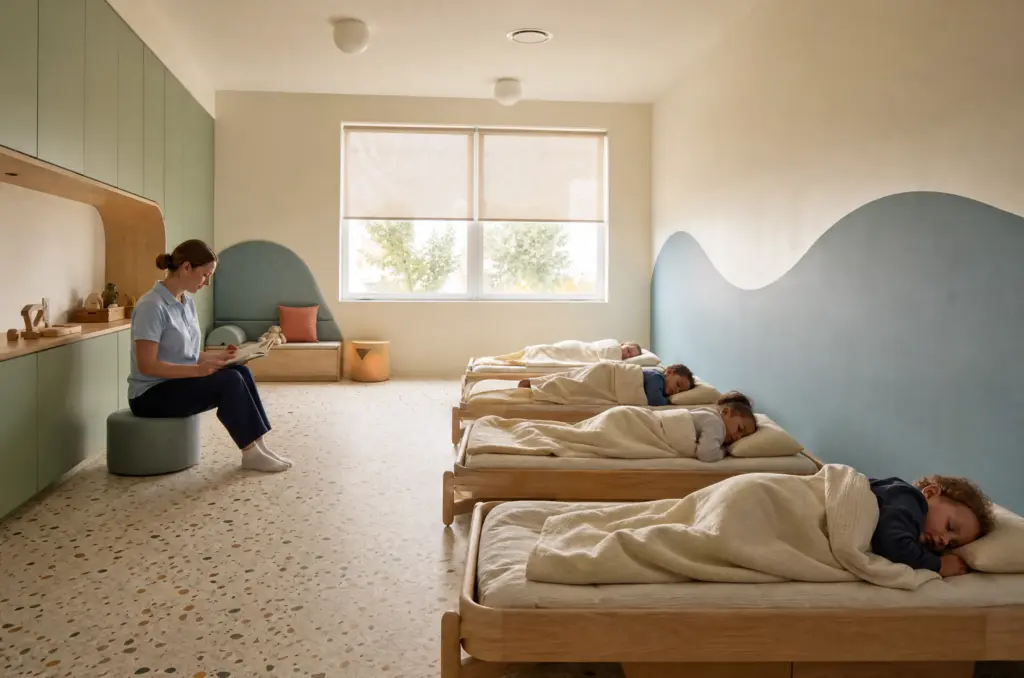
Health and safety. First aid certification, immunisation record keeping, emergency plans, safe sleep practice, food handling, and physical space requirements including minimum indoor and outdoor square footage per child.
Record keeping and reporting. Attendance, incident reports, and an obligation to report serious incidents to the health authority.
An important practical point: only licensed programs can participate in the provincial fee reduction initiative. That means licensing is not just a safety question, it directly affects what you pay. We cover how those programs work in our guide to BC child care subsidies.
What are the categories of care in BC?
The terminology confuses almost everyone, so here it is plainly.
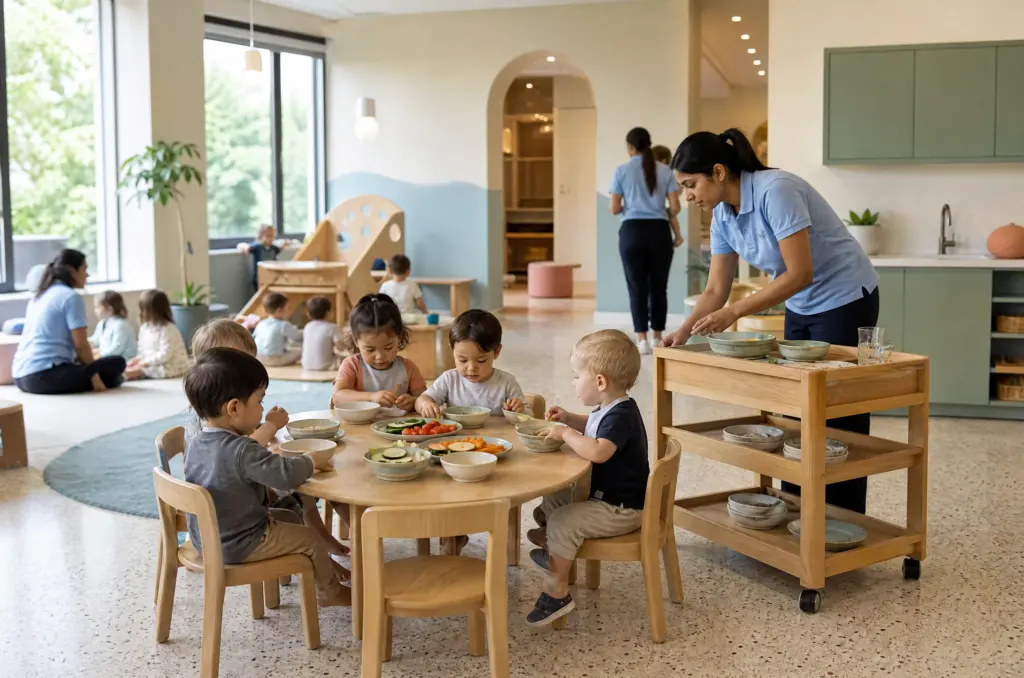
Licensed group care. A facility caring for children in age-grouped rooms, licensed and inspected. Most academies and larger programs sit here.
Licensed family care. Care in the provider’s own home, licensed and inspected, with a cap on how many children may attend.
Registered licence-not-required. A middle category. The provider cares for a small number of children from no more than two families, is not licensed, but has chosen to register with a Child Care Resource and Referral centre, which involves a criminal record check, first aid, and some reference checking.
Licence-not-required. Care for children from no more than two families, with no oversight of any kind. Legal, but nothing has been verified by anyone.
In-home care by a nanny. Outside the licensing system entirely, since it is a private employment relationship.
What does licensing not guarantee?
This is the part that gets left out, and it matters.
Licensing is a floor, not a ceiling. It confirms that a program meets minimum enforceable standards on safety, staffing, and space. It says nothing at all about the quality of the experience a child has inside those walls.
It does not measure whether educators speak to children with warmth. It does not assess whether the environment is calm or chaotic. It does not evaluate the curriculum, the materials, the pace of the day, or how transitions are handled. A program can be fully compliant and still be a loud, cluttered, emotionally flat place to spend nine hours.
So licensing tells you a program has cleared the bar. Everything you actually care about sits above that bar, and the only way to assess it is to visit. Our guide to what to look for on a child care tour covers how.

How do you check a program’s licensing status?
Four steps, none of which take long.
Ask to see the licence. Licensed facilities are required to display it. A program that hesitates here has told you something.
Check the health authority’s public records. Vancouver Coastal Health publishes licensing information including inspection history and any substantiated complaints. This is public, free, and worth ten minutes.
Read the inspection reports rather than just the outcome. Most programs have some findings. What matters is the pattern: minor administrative items are ordinary, while repeated findings on supervision, ratios, or safety are not.
Ask about the last inspection directly. A confident program will tell you what came up and what they did about it. That answer is more informative than a clean record you never discussed.
What should you ask beyond licensing?
Since licensing is the floor, these are the questions that find the ceiling.
How long have the educators in this room been here, and what has turnover looked like over the past year. What are the ratios in practice at the busiest point of the day rather than on the licence. What happens when a child is having a hard time. What do you do if you notice something in a child’s development, and who do you refer to. How do you communicate on a difficult day.
On that second-to-last point, our guide to developmental screening in early childhood covers what structured observation should look like, which is well above anything licensing requires.
Is unlicensed care ever the right choice?
Honestly, sometimes. In a market with a documented shortage, families take what they can get, and a warm, attentive, experienced registered provider caring for three children can be a genuinely good environment.
If you go that route, do the verification yourself that licensing would otherwise have done. Ask for a criminal record check and current first aid certification. Ask for references from at least two current families and actually call them. Ask what happens if the provider is sick, since there is no backup staffing. Ask about safe sleep practice and emergency procedures. Visit more than once, at different times of day.
And know what you are trading. Unlicensed care means no external oversight, no complaint mechanism beyond leaving, and no eligibility for the fee reduction that would otherwise lower your monthly cost.
Where Kinder Roots sits
Our Redbridge campus in Squamish operates as a licensed group care facility for children ten months to five years. You can read about the building and its licensing on our campus page, and about the approach we take above those requirements on our philosophy page.
Choosing licensed child care BC regulates gives you a verified floor on safety, staffing, and space, plus access to the fee reductions that make care affordable. What it does not give you is any sense of what the days actually feel like. Check the licence, read the inspection history, and then go and stand in the room.
Now enrolling in Squamish
Licensing is the floor, not the finish
Our Redbridge campus operates as licensed group care for children 10 months to five years. Everything worth choosing a program for sits above that bar, which is why we would rather you came and looked.
Join the waitlistRedbridge campus, 1500 Scott Crescent, Squamish. Ages 10 months to 5 years.