
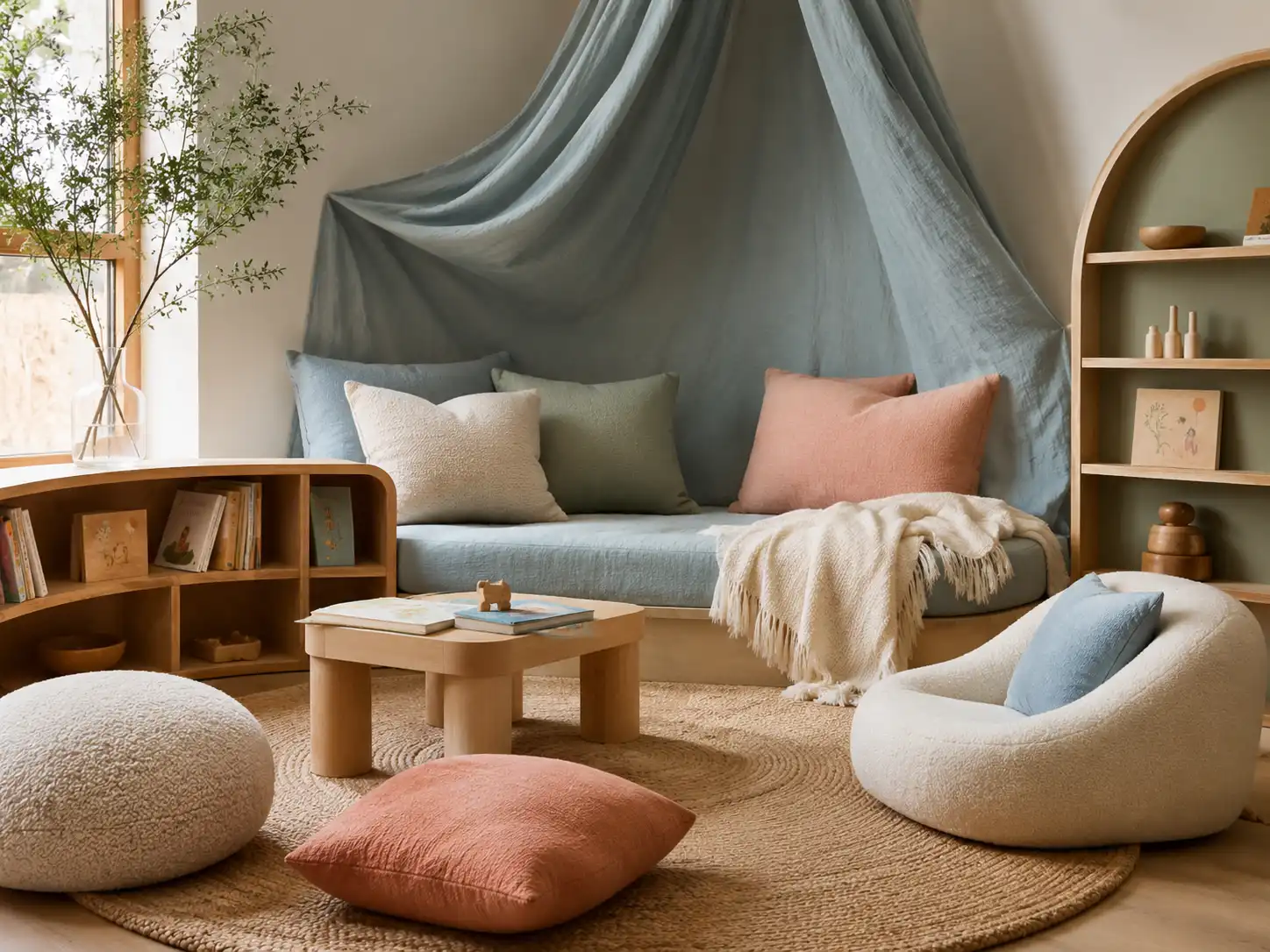



Walk into any Kinder Roots classroom and the first thing you’ll notice is what’s missing: bright primary colors, molded plastic, cartoon characters. What you’ll find instead is wood — sanded, oiled, and left to show its grain. This wasn’t a design preference. It was a decision about what we wanted children’s hands and eyes to learn from, every single day.
Plastic doesn’t age. It doesn’t scuff, warm to the touch, or carry the small marks of use. And that, we came to believe, is precisely the problem. A material that never changes teaches a child nothing about cause and effect, about care, about the passage of time. Wood does all three. A shelf edge worn smooth by years of small hands is a quiet lesson in history — this space existed before you, and it will hold you gently while you’re here.
There’s also a sensory argument, one Montessori made a century ago and that modern material science has only reinforced: children learn through touch before they learn through explanation. The texture, weight, and temperature of a material are the first data a child collects about the world. Wood offers variation — grain, knot, warmth — where plastic offers uniformity. One invites exploration; the other invites nothing at all.
A material that never changes teaches a child nothing about cause and effect, about care, about the passage of time.
None of this means the room is precious or fragile. Our furniture is built to be climbed on, dragged across the floor, and occasionally dropped — and it is, by design, forgiving of all of it. The goal was never a museum. It was an environment that ages alongside the children in it, gathering the same small imperfections they do, and wearing them just as well.
We didn’t choose wood because it looks warmer in photographs, though it does. We chose it because it tells the truth about time, use, and care — the same three things we hope children carry with them long after they’ve outgrown the furniture.