


Parents searching for a Montessori Squamish program run into the same three words over and over: Montessori, Reggio, play-based. The words are used loosely, often as marketing rather than description, and it is genuinely hard to work out what any of them means for a child’s actual Tuesday morning.
This is our attempt to explain the landscape plainly, including where our own approach sits inside it and why we built it the way we did.
What is the Kinder Curriculum?
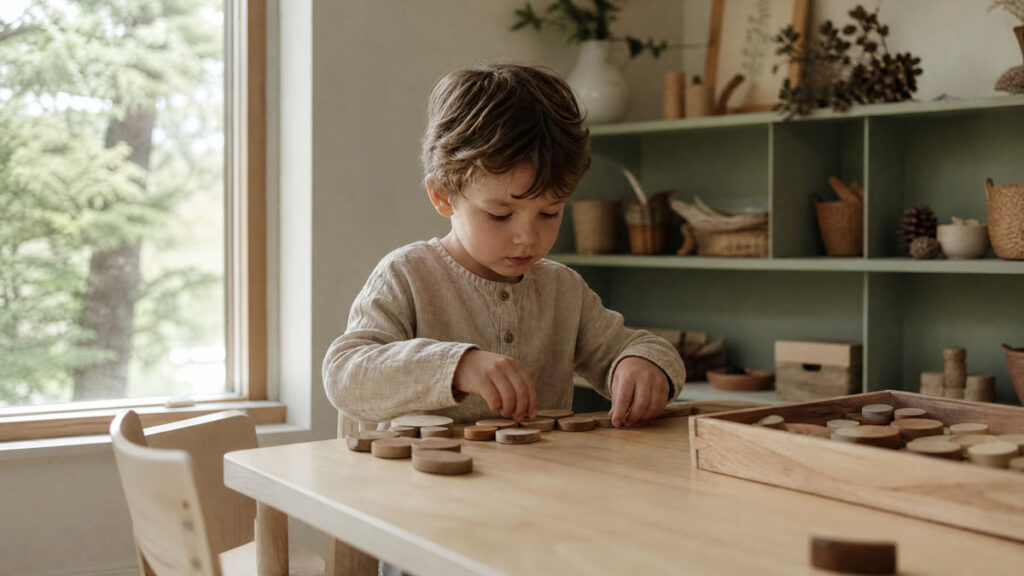
The Kinder Curriculum is our own framework, and it holds two things together that are usually treated as alternatives: structure and open-ended exploration.
The reasoning behind it is simple. A young child needs both. They need sequence, repetition, and the deep satisfaction of mastering a real skill with their own hands. They also need long stretches of time where the outcome is not decided in advance and their own question is the thing driving the work. Programs that offer only the first produce children who are capable but incurious. Programs that offer only the second produce children who are curious but frustrated by their own lack of capability.
So the Kinder Curriculum integrates the two deliberately rather than alternating between them. It is not a structured morning and a free-play afternoon. It is a single approach in which a child moves between focused work and open inquiry across the day, with educators reading which one a particular child needs at a particular moment.
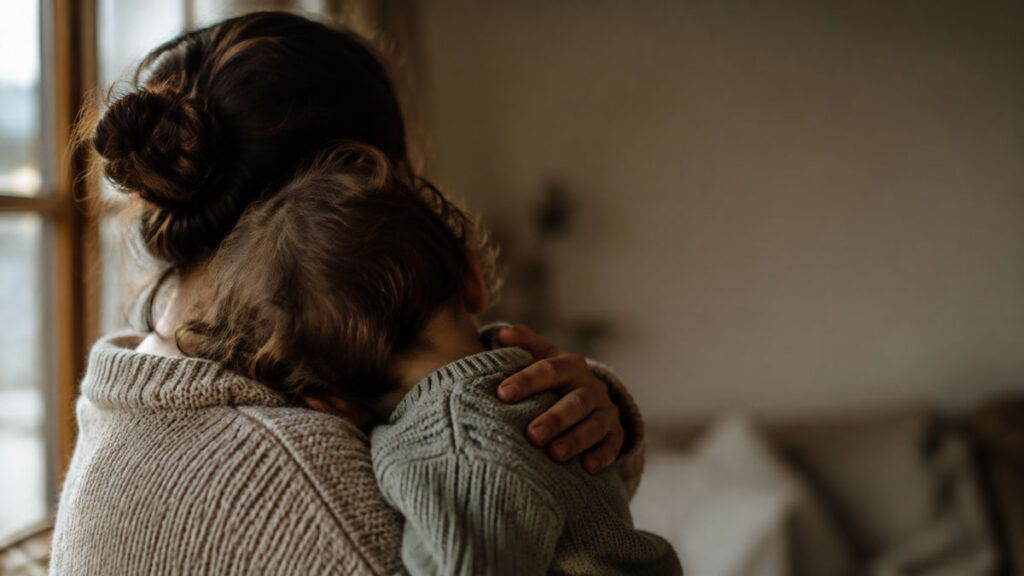
Underneath both sits something we treat as prior to all of it: a child’s internal state. Before a child can concentrate on anything, they have to feel safe, calm, and like they belong in the room. That is not a warm-up to the real curriculum. It is the foundation the rest of it stands on, and if it is missing, no framework works.
Where do Montessori and Reggio Emilia come in?
Both traditions contribute real things to the Kinder Curriculum, and it is worth being precise about what each one actually offers rather than using the names as shorthand for quality.
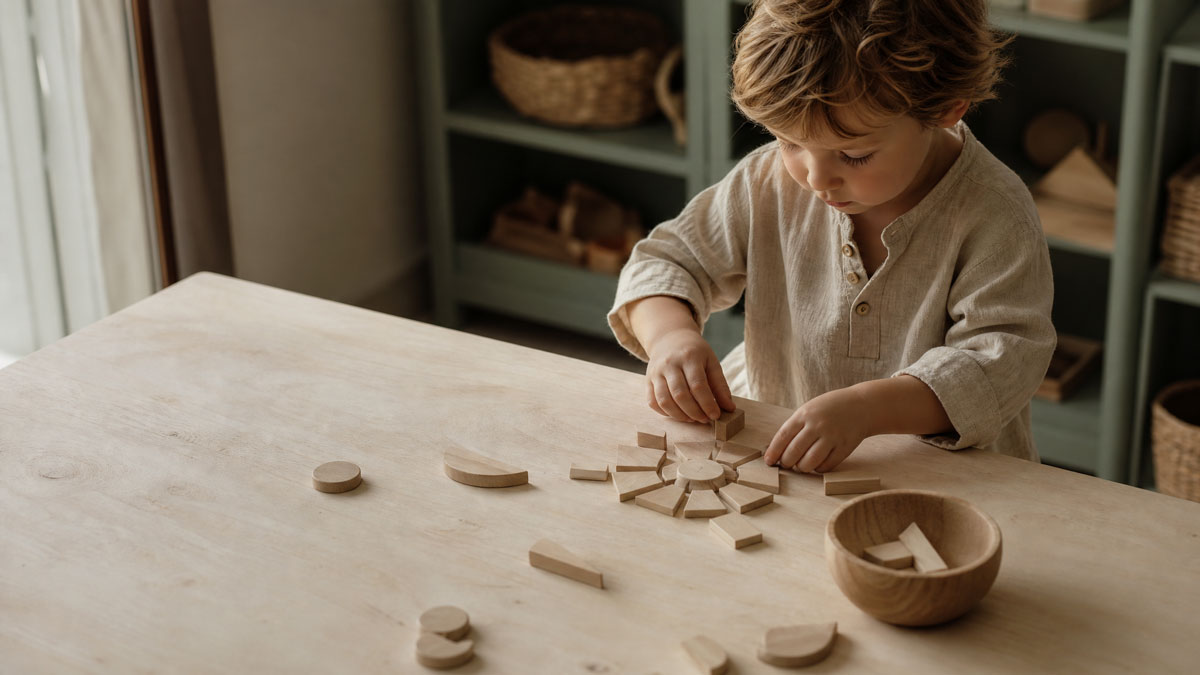
From Montessori: structure, independence, and real capability. The Montessori tradition takes seriously that children want to do real things properly. Materials are sequenced so that each one prepares the next. Children are trusted with actual tools rather than toy versions. There is a strong emphasis on uninterrupted concentration, on a child working through something to completion without an adult breaking the spell. The practical-life work, pouring, sweeping, buttoning, fastening, builds genuine competence, and competence is where a young child’s confidence actually comes from. Not praise. Capability.
From Reggio Emilia: creativity, collaboration, and reflective thinking. The Reggio tradition treats children as capable thinkers whose questions are worth following. Projects emerge from what children are actually curious about rather than from a calendar of themes. Children work together on problems that take days or weeks. Educators document what children say and do, then reflect it back, which teaches children that their thinking matters and is worth examining. The environment is treated as a third teacher alongside the adults and the other children.
What we do not do is present these as our philosophy. They are contributing traditions, and both are more than a century old and were designed for specific contexts that are not Squamish in 2026. Taking what genuinely works from each, and integrating it under a single coherent approach, is a different exercise from adopting either wholesale.
What does play-based actually mean?
This is the most-used and least-defined term in early childhood, so it is worth unpacking.
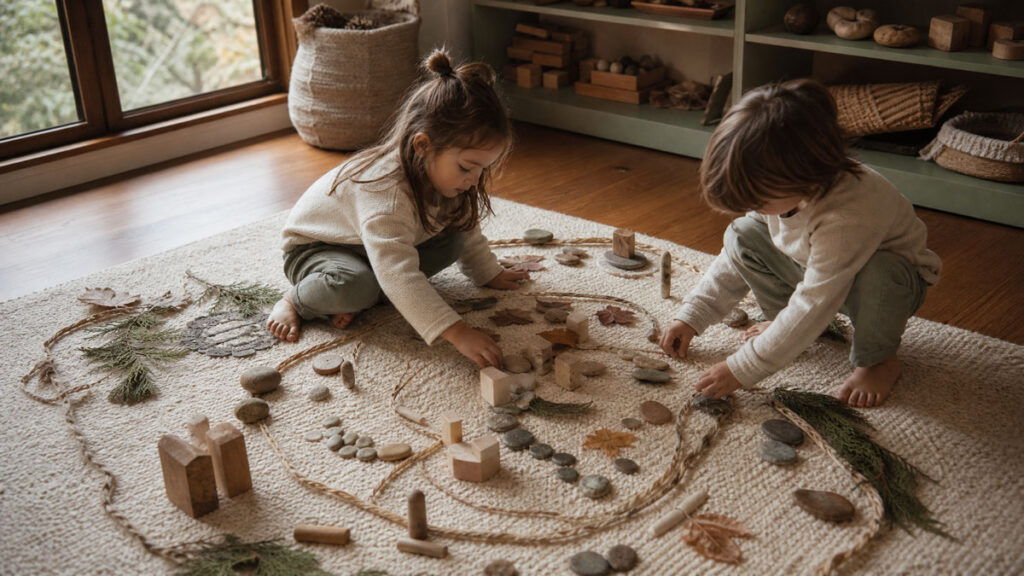
At its best, play-based learning reflects a real finding: young children learn through play more effectively than through instruction. Play is how a child tests ideas, practises social negotiation, and builds the cognitive scaffolding that later academic learning sits on. A child sorting stones by size is doing early mathematics. Two children negotiating who plays which role are doing sophisticated social reasoning.
At its worst, play-based is a description of what happens when nothing has been planned. The difference between the two is invisible on a website and obvious in a room.
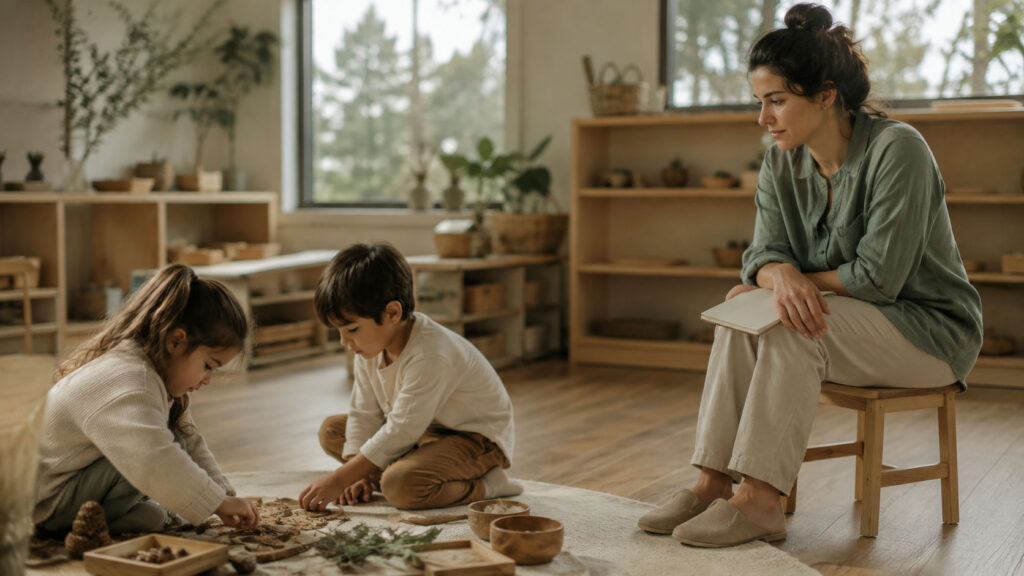
What distinguishes intentional play from unstructured time is the adult. In a well-run room, educators have chosen what materials are available and why, they are observing what children do with them, and they intervene rarely but deliberately, usually by adding a material or asking a question rather than by directing. The play looks free. The conditions for it were carefully made.
The practical question for a parent is not whether a program is play-based. Nearly all of them say they are. The question is what the adults are doing while the children play.
Does the framework matter more than the room?
Honestly, no. And this is the part most comparison articles leave out.
You can run a Montessori Squamish program badly. You can run a Reggio-inspired program badly. A framework is a set of intentions, and intentions are executed by specific adults in a specific building on a specific Tuesday. Two programs claiming the same philosophy can produce completely different experiences for a child.
What consistently matters more than the label:
The environment itself. A young child’s nervous system is still being built, and the space is one of the inputs. Noise levels, light quality, visual clutter, the materials in reach, the pace of transitions. A calm room regulates. A loud, cluttered, overstimulating room does the opposite, and no curriculum overcomes that.
The adults, and how long they stay. Children build security through repetition with specific people. A program with a beautiful framework and high staff turnover is a worse experience than a plainer program where the same educator has been in the room for four years.
The ratio in practice. Not the ratio on the licence, the ratio at four in the afternoon when two educators are on break.
How transitions are handled. Arrival, departure, moving between activities, moving up an age group. These are the emotionally loaded moments, and they reveal what a program actually believes.
If you take one thing from this article, take this: ask about the framework, then spend the rest of the visit watching the room and the adults.
How should you compare a Montessori Squamish program with the others?
A practical approach that cuts through the terminology.
Ask each program to describe an ordinary Tuesday from arrival to pickup. Not the philosophy, the day. You will learn more from that single question than from any amount of comparison of named approaches.
Ask what happens when a child does not want to participate. The answer tells you whether the framework is applied to children or with them.
Ask how long the educators have been there. Ask what materials children reach for most. Ask what a child who has been in the program for two years can do that they could not do before. For older children, our guide to the preschool years covers what to expect between three and five.
Then stand in the room and notice how it feels. Your own nervous system is reading the space, and it is a more reliable instrument than a brochure. Our guide to what to look for on a child care tour goes through this in detail.
Where this leaves you
The named approaches are useful vocabulary and poor shorthand. Montessori offers real things. Reggio Emilia offers real things. Play-based can mean anything from carefully designed to entirely unplanned. None of the labels tells you whether a particular room, staffed by particular adults, will be a good place for your particular child.
What we have tried to build in the Kinder Curriculum is an approach that takes structure and exploration seriously in equal measure, and that treats a child’s sense of safety and belonging as the foundation everything else is built on rather than as a nice side effect. You can read more about how that works across the day on our curriculum page, and about the thinking behind it on our philosophy page.
Ask hard questions of every program you visit, including ours. A program that welcomes the questions is usually a program worth considering.
Now enrolling in Squamish
See the Kinder Curriculum in a real room
Structure and open exploration held together, with a child’s sense of safety treated as the foundation rather than a side effect. The label matters less than the room, so come and stand in it.
Join the waitlistRedbridge campus, 1500 Scott Crescent, Squamish. Ages 10 months to 5 years.
Reviewed by the Kinder Roots Education Team