


Speech and language milestones generate more quiet worry than almost any other area of early development, usually because a parent has just met another child the same age who is talking in paragraphs. The range of normal here is genuinely wide, late talking is common and most often resolves on its own, and there is a short list of signs that are worth acting on rather than waiting out. Knowing which is which removes most of the anxiety.
Here is what typically happens between one and five, and what warrants a conversation.
What speech and language milestones are typical between one and five?
Treat these as the middle of a wide range rather than a schedule. Individual variation at these ages is substantial and mostly meaningless.
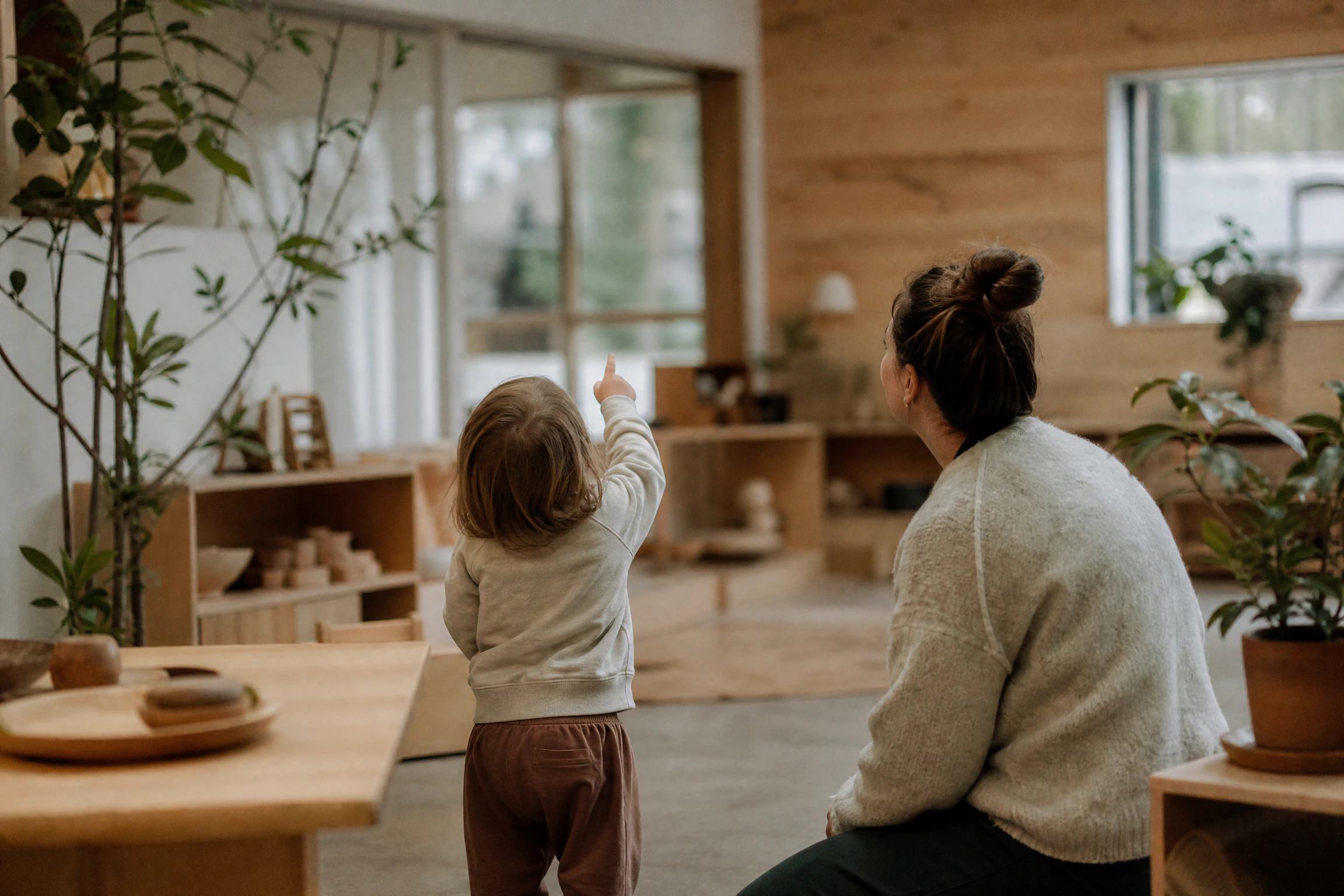
Around twelve months. A first word or two, often unclear and often not the ones you expected. Responds to their name. Follows a simple instruction with a gesture attached. Points at things to show you, which matters more than any word, because pointing to share attention is the foundation the rest is built on. Babbles with the rhythm of speech.
Eighteen months. Somewhere between ten and twenty words is common, though the spread is wide. Understands considerably more than they say, which stays true for years. Points to a body part or a familiar object when asked. Starting to imitate words.
Two years. Roughly fifty words or more, and the beginning of two-word combinations, more milk, daddy gone. The two-word combination matters more than the word count, because it signals that grammar is starting. Strangers may understand about half of it. Follows a two-step instruction.
Three years. Three and four-word sentences. Familiar adults understand most of what they say. Uses pronouns, asks a great many questions, holds a short back-and-forth conversation. Vocabulary expands faster than anyone can count.
Four years. Full sentences, tells a story with events in order, understood by people outside the family. Most sounds are correct, with some, often r, l, th, s blends, still developing, which is ordinary and not a problem at this age.
Five years. Connected narrative, follows multi-step instructions, speech is clear to everyone, uses language to negotiate, explain, and argue. This is the point where language becomes the main tool for everything else.
How much variation is normal?
More than most parents expect. Two children at the same birthday can be a year apart in expressive language and both be entirely typical.
Several things shift the timing without indicating anything. Boys average slightly later than girls in early expressive language, and the gap closes. Later-born children sometimes talk later, with a sibling doing the talking for them, and often have stronger social language. Children growing up with more than one language may have a smaller vocabulary in each language while the combined total is on track, and bilingualism does not cause language delay. A period of recurrent ear infections can produce a temporary plateau.
The most important distinction, and the one that reduces unnecessary worry: comprehension matters more than production. A two year old who says very little but clearly understands everything, follows instructions, points, shows you things, and communicates intent through gesture is in a different situation from a two year old who does neither. The first is often a late talker who catches up. The second is the one worth looking at.

What signs are worth acting on?
This is the short list. Any of these justifies a conversation rather than a wait-and-see.
No babbling by around nine months. No gestures, no pointing or waving, by twelve months. No single words by sixteen months. No two-word combinations by around two years. Loss of language or social skills a child previously had, at any age, which warrants prompt attention. Not responding to their name or to sounds, which first raises a hearing question. Little interest in interacting with people, or not following where you point. Speech that almost nobody outside the household can understand by three. Persistent stammering that is getting worse rather than better, or is accompanied by visible effort and avoidance.
Hearing is the first thing to rule out, always. BC screens hearing at birth, but hearing can change, and recurrent middle ear fluid is common in early childhood and easy to miss. A child who seems to tune out intermittently may be hearing intermittently.
What do you do about it in BC?
The pathways are public and you do not need a referral to start.
Speak to your child’s educators first. They see your child in a group all day, hear them with peers, and have a reference range across many children that you do not. Ask specifically what they observe about how your child communicates with other children, which is often where a difference shows first.
Then contact your public health unit or your family doctor. BC has publicly funded speech-language pathology for preschool children, and in most of the province families can self-refer to it. Wait times vary, so an early call costs little. Our guide to developmental screening in early childhood explains how the process works and what an assessment involves.
Early is better, and not because a delay is a crisis. It is because the intervention for a true delay is far more effective in the preschool years than later, and because most referrals end with a professional telling you that your child is fine, which is itself worth having.
What actually helps at home?
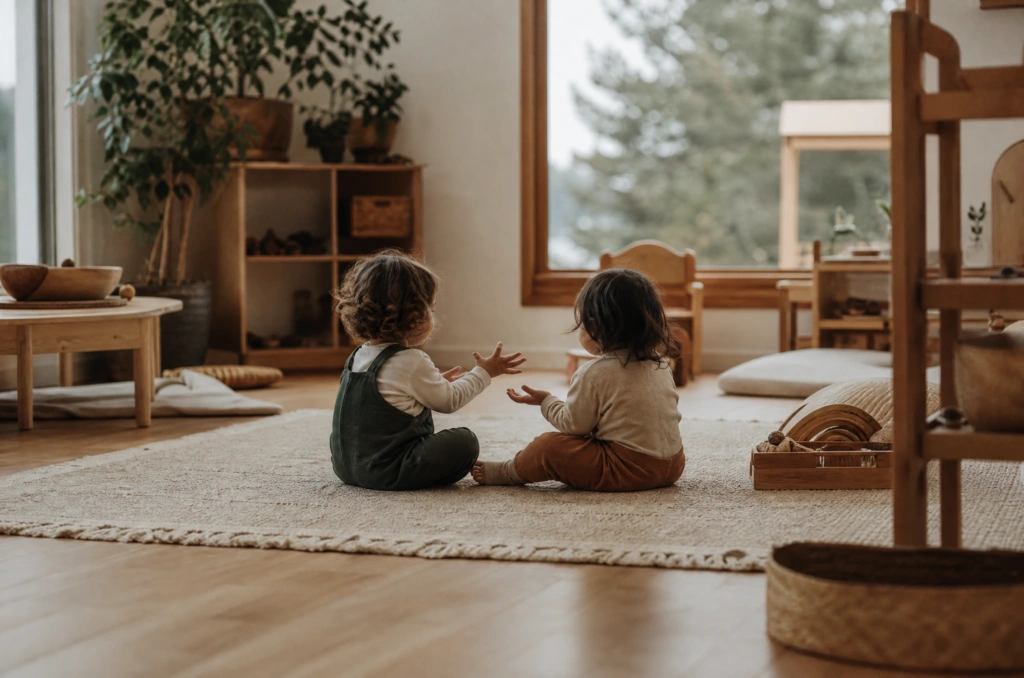
Language is built in conversation, and the quantity and quality of talk a child hears is one of the strongest influences on their language at five. The useful behaviours are ordinary.
Talk through what you are doing, in full sentences, at normal speed. Narrate the world. Follow their lead and talk about whatever they are already attending to rather than redirecting them to your topic, since the words land better when they are about the thing in front of them.
Leave gaps. Ask something and wait, longer than feels comfortable, because a child who is formulating needs several seconds and a parent who fills the silence takes the turn away.
Expand rather than correct. When a child says dog run, say yes, the dog is running fast. They hear the correct form without being told they got it wrong.
Read every day, and talk around the book rather than only through it. Point at things, ask what is happening, let them turn back to the page they liked.
Sing, because rhythm and rhyme do real work on the sound structure of language.
And reduce background noise. A television running behind a conversation measurably reduces how much language a young child picks up.
What not to do
Do not make a child perform words before giving them what they are asking for. A child pointing at the water with urgency needs water, and holding it hostage for the word reliably produces resistance rather than speech. Name it as you hand it over.
Do not correct pronunciation directly in a young child. Repeat the word properly in your own next sentence and leave it there.
Do not wait because someone told you boys talk late or he will get there in his own time. That is often true, and it is not a reason to skip a free assessment that would confirm it.
The thing to hold onto
Most children who talk late talk fine. The spread between a child who speaks in sentences at two and one who speaks in sentences at three closes, and by school neither is identifiable. What is worth your attention is not the word count but the communication underneath it: does your child want to connect, do they share attention, do they understand you. When those are present the words almost always follow. When they are not, you have a short list and a public pathway, and acting early costs nothing.
Now enrolling in Squamish
Language built in conversation, all day
Our educators observe, document, and follow what each child is already attending to, because that is where the words land. Infant Toddler, JK1, and JK2 programs opening at Redbridge in Squamish.
Join the waitlistRedbridge campus, 1500 Scott Crescent, Squamish. Ages 10 months to 5 years.
Reviewed by the Kinder Roots Education Team