


Touring two programs in the same week can leave a parent genuinely unsure which one is more serious. One has children writing letters on worksheets at a table. The other has children building something elaborate out of blocks and nobody is holding a pencil. The first looks like school. The second is play-based learning, and the question worth asking is which one is actually teaching. The evidence on that is clearer than the two rooms suggest.
Here is what play-based learning means, what the academic alternative gets right and wrong, and how to read the difference on a visit.
What does play-based learning actually mean?
The term causes trouble because it sounds like an absence of a plan. In a well-run room it is the opposite.
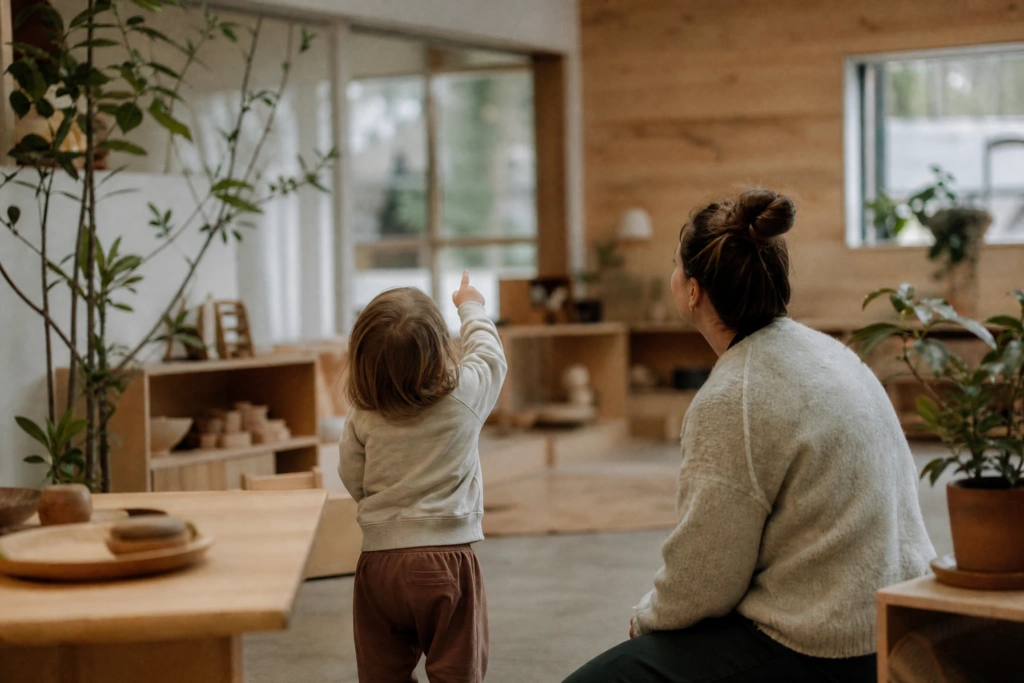
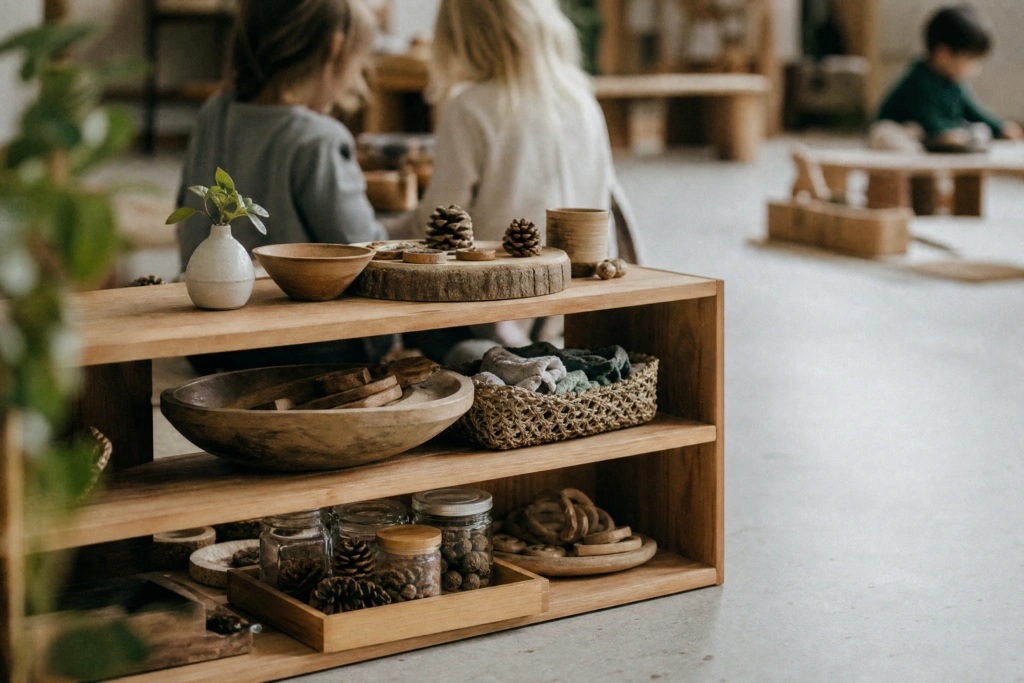
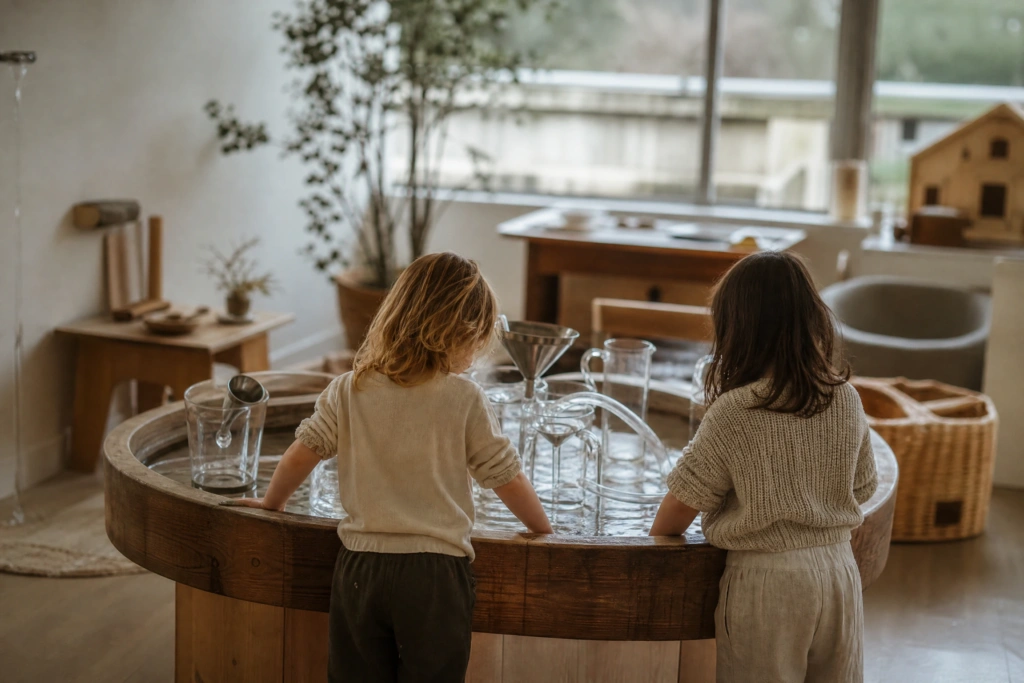
Play-based learning means the curriculum is delivered through activity the child has chosen and is driving, inside an environment an adult has deliberately constructed to make certain learning likely. The child chooses the water table. The educator put the funnels, the measuring cups, and the tubing there this morning because this group is working on volume and capacity. The child experiences free choice. The learning was planned.
That distinction separates play-based practice from a room where children are simply left alone with toys. The markers of the real thing: intentional materials that change in response to what children are doing, educators who observe and document rather than supervise, and extension in the moment, the question asked at the right time that moves a child’s thinking forward.
Ask how the environment is planned and how often it changes. A program doing this well can describe why a particular material is out this week. A program that cannot is doing something else.
What does the evidence say?
The research on early academic instruction has been consistent for decades and it is not what the worksheets imply.
Children in direct-instruction early programs do show earlier gains on the specific things they are drilled on. Letter recognition, counting, name writing. Those gains are real and they are short-lived. By roughly grade two or three the difference between them and play-based peers has closed, and the longer-term follow-ups tend to find the early-academic groups level or behind on motivation, attitude to school, and social behaviour.
The likely mechanism is not that worksheets damage children. It is that the hours spent on them displace what that period of development is actually for. A four year old doing a tracing sheet is practising a narrow motor task. A four year old negotiating roles in an elaborate pretend scenario is running executive function, language, perspective-taking, and self-regulation at the same time, and those are the capacities that later academic work draws on.
Executive function is the clearest example. Planning, inhibition, working memory, and flexible thinking predict later school performance as well as or better than early academic skills. They are built in sustained, complex, self-directed play. They are not built on worksheets.
So is structure the enemy?
No, and this is where the debate usually goes wrong. The opposite of an academic room is not an unstructured one.
Young children need a predictable rhythm, clear expectations, long uninterrupted stretches to go deep, real responsibility, and genuine skill instruction when they are ready for it. A child who wants to write their name should be taught to write their name. A child who is counting everything should be given more to count.
The useful question is not structure or freedom. It is where the structure sits. In a strong early years room the structure is in the environment, the rhythm of the day, and the adult’s intentions. The freedom is in what the child does inside it. That is a different arrangement from a room where the structure sits in a sequence of adult-directed tasks that every child completes at the same time.
The Kinder Curriculum is built on exactly that integration: Montessori structure, independence, and real practical capability, held together with Reggio Emilia’s emphasis on creativity, collaboration, and reflective thinking. Not alternated week to week and not diluted into something vaguer than either. Grounded and alive at the same time.
What should you look for on a visit?
The room tells you most of it within about ten minutes, if you know what to watch.
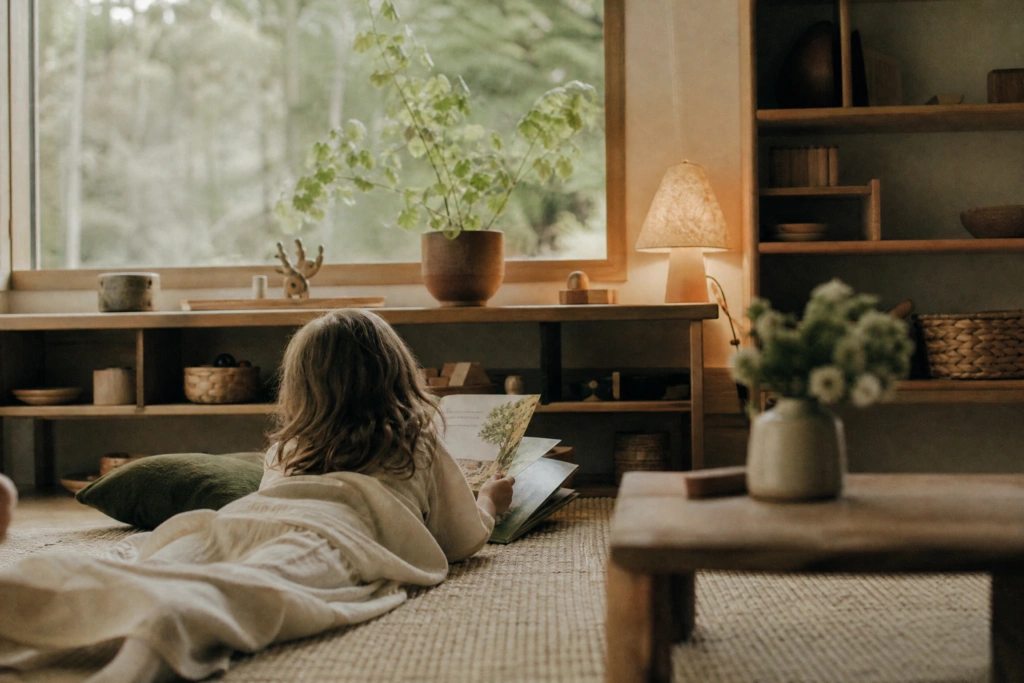
How long do children stay with something. Sustained engagement, twenty or thirty minutes on one self-chosen thing, is the single best signal in the room. It means the environment is interesting enough and the schedule is leaving them alone long enough to get deep. Children drifting between activities every three minutes tells you the opposite.
Who is talking. Count it roughly. In a strong room children do most of the talking and adults ask more questions than they give instructions.
What is on the walls. Twenty near-identical craft outcomes mean adult-directed work. Children’s actual work, in progress, with photographs and written observations of what children said and did, means somebody is watching and thinking.
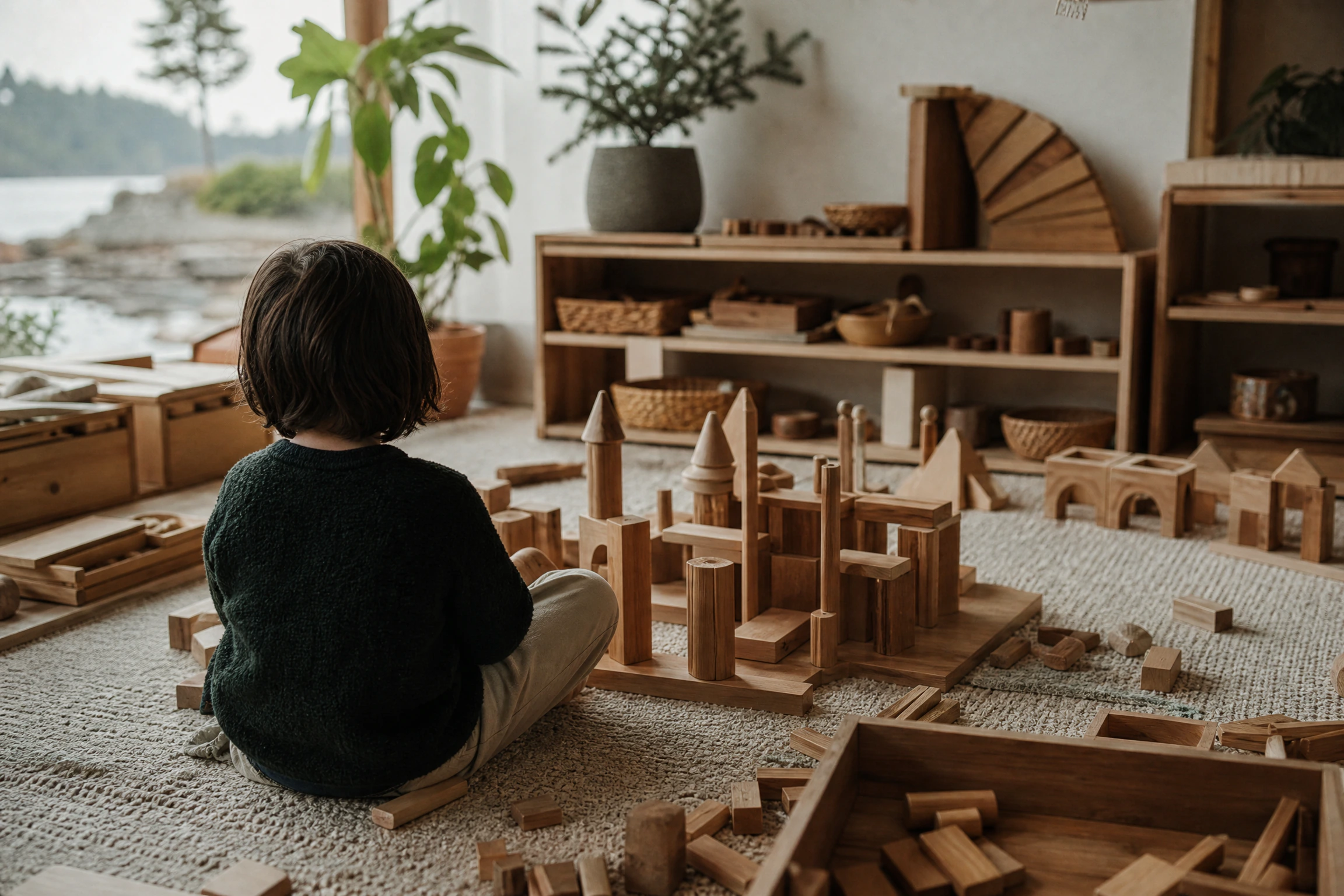
What the materials are. Open-ended materials that can become many things, blocks, clay, fabric, water, loose parts, support complex play. Single-outcome plastic toys that do one thing produce brief play.
How interruptions are handled. Ask what happens when a child is deeply involved and it is time to tidy up. A program that protects concentration will say so.
What the educator says about a specific child. Ask what one child is currently working on. A detailed answer about that child’s particular preoccupation means real observation. A generic answer about the group’s theme means a curriculum that is being delivered rather than built.
Our guide to what to look for on a tour covers the rest of the visit, and our piece on what actually matters in Montessori and Reggio goes further into the pedagogy.
Why does the academic room feel more reassuring?
Worth naming, because the pull is real and it is not stupidity.
Worksheets produce artefacts. At the end of the day there is a piece of paper, and it looks like evidence that something was done. Complex play produces a dismantled block structure and a story the child cannot fully recount. One of those is easier to take home.
The academic room also matches what adults remember school being, and it offers a visible answer to the anxiety about falling behind. That anxiety is the thing being sold. A program that promises an academic head start is selling reassurance to parents, and the price is paid in the child’s hours.
The way out of it is to ask for the evidence you actually want: not paper, but observation. What is my child working on. What have you noticed changing. What are they curious about right now. A program that can answer those is teaching.
What the choice is really between
Both rooms are trying to prepare a child for what comes next. They disagree about what preparation is. One produces a four year old who can complete a tracing sheet. The other produces a four year old who can hold a plan in mind, work through frustration, negotiate with a peer, and stay with something difficult for half an hour. The second child will learn to trace in about a week whenever anyone asks them to. Choose the room that is building the learner rather than the output.
Now enrolling in Squamish
Structure in the room, freedom in the work
The Kinder Curriculum is an intentional integration of Montessori structure and Reggio Emilia creativity. Not alternated, not diluted. Children choose their work inside an environment that was planned with intention.
Join the waitlistRedbridge campus, 1500 Scott Crescent, Squamish. Ages 10 months to 5 years.
Reviewed by the Kinder Roots Education Team