


Toddler care Squamish families need sits in an awkward middle. Your child is no longer a baby, not yet a preschooler, and the programs built for either end of that range do not quite fit. Between roughly eighteen and thirty months a child changes faster than at almost any other point, and the care they need changes with them.
This guide covers what makes this age band different, what to look for in a program, and how to time your search in a town where spaces are genuinely scarce.

What makes toddler care Squamish programs different?
The eighteen to thirty month band has its own logic, and a program that treats it as either extended infant care or early preschool will get it wrong in both directions.
Three things define this age.
Mobility outpaces judgement. A two year old can climb, run, and reach almost anything, and has very little sense of consequence. The environment has to do the safety work so that adults are not saying no every ninety seconds. A well-designed toddler room is set up so that nearly everything within reach is genuinely allowed.
Language is arriving unevenly. Some children in this band have a handful of words, others have hundreds. The gap is normal and enormous. What matters is that adults narrate constantly, wait for responses, and treat gestures and sounds as real communication rather than waiting for sentences.
Autonomy is the whole project. The defining drive of this age is doing it myself. That is what the difficult moments are actually about. A program that reads this as defiance to be managed will produce a frustrated child. A program that reads it as development and builds in genuine opportunities to do things independently will produce a capable one.
What should the room look like?
You can read a toddler room quickly if you know what to look at.
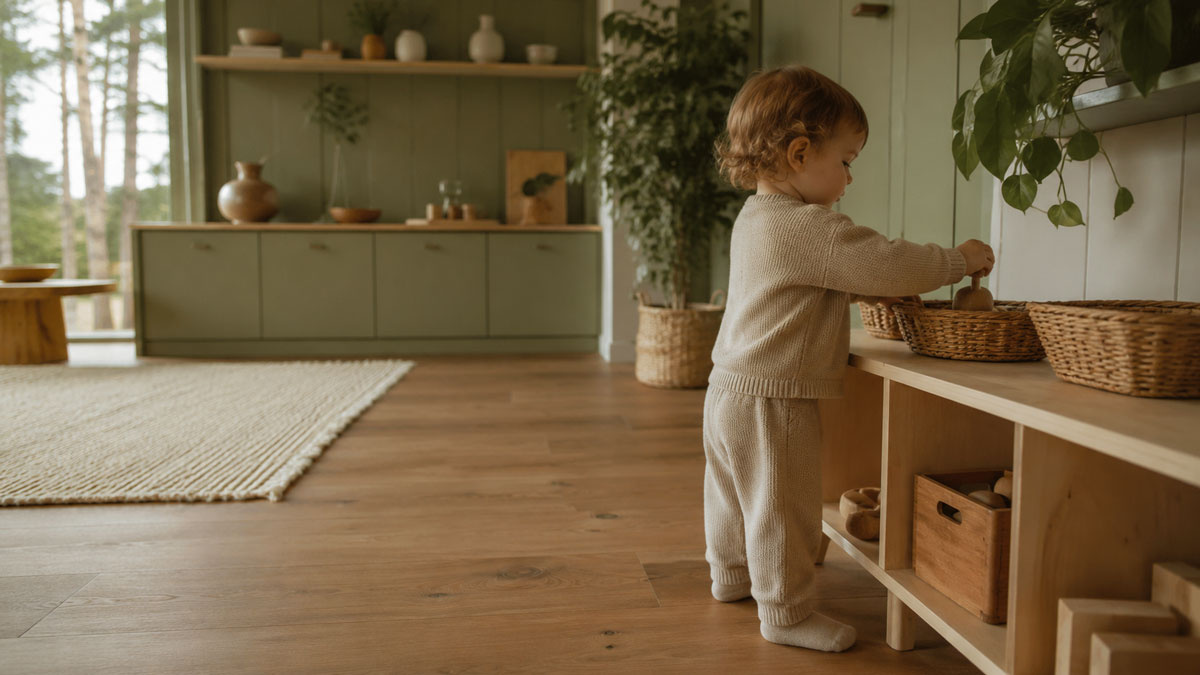
Low, open, reachable. Materials on low shelves in small quantities, accessible without asking. Deep clutter is worse here than at any other age because a toddler cannot filter it.
Duplicates of popular things. Sharing is not developmentally available yet in any reliable form. Rooms with two or three of the most sought-after items have far fewer conflicts, and the adults spend their time on something more useful than arbitration.
Space to move. Climbing structures, low steps, room to run a little. A toddler who cannot move enough will find a way, usually one nobody wanted.
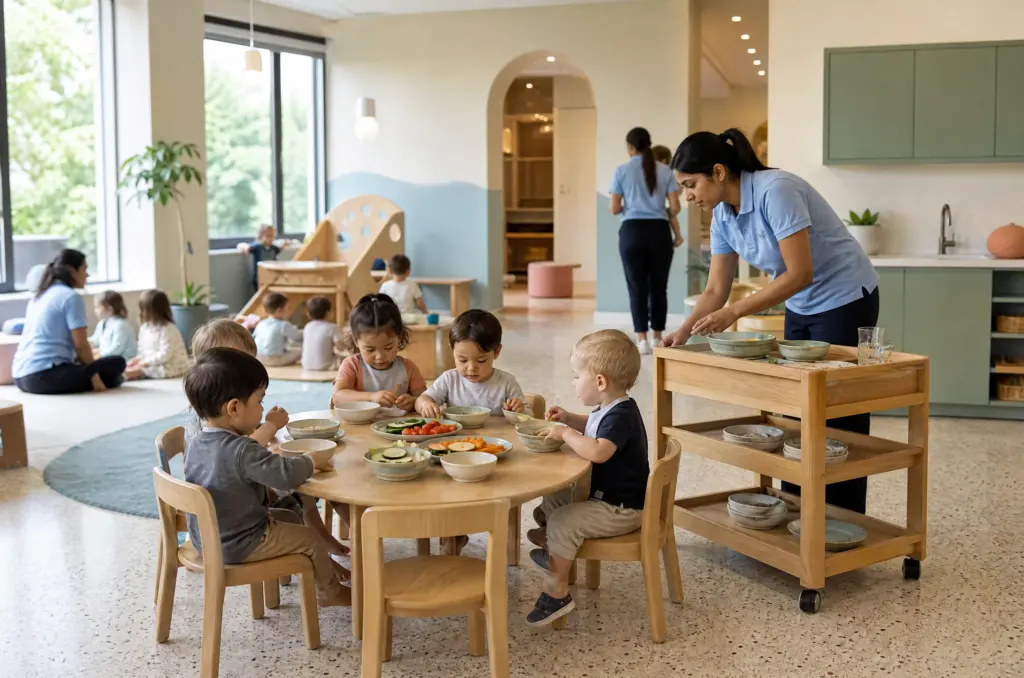
Real practical-life work. Pouring their own water, wiping a spill, putting on a coat, carrying their own plate. These look like chores to adults and feel like mastery to a two year old. It is the single most reliable source of confidence at this age.
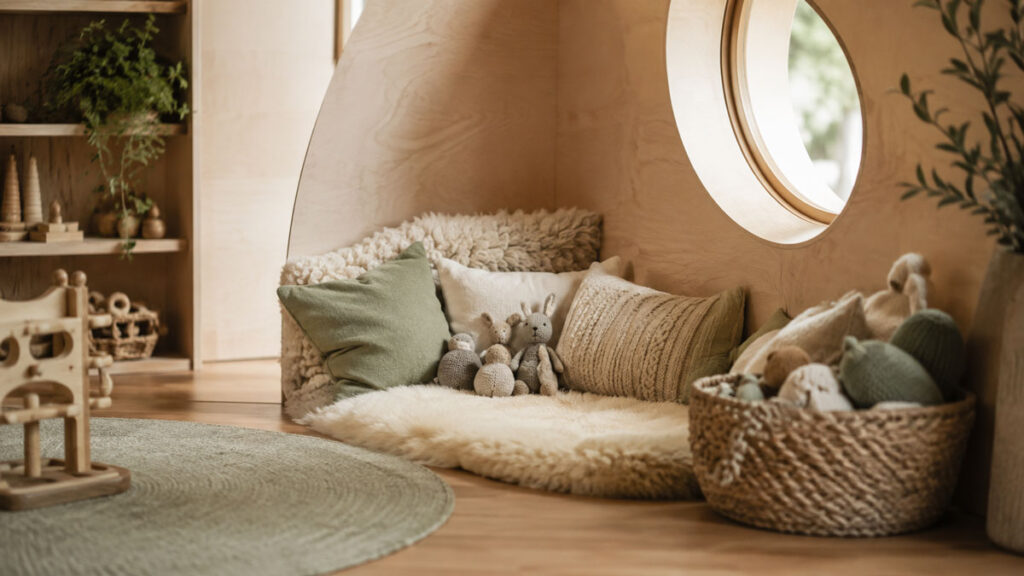
A place to withdraw. A soft corner, a nook, somewhere enclosed. Toddlers get overstimulated and need an exit that is not the hallway.
How should adults handle the hard moments?
This is the question that separates programs, and it is worth asking directly on any visit.
A tantrum at two is not manipulation and it is not misbehaviour. It is a nervous system exceeding its own capacity to cope, in a person who has no other tool available. The child is not giving you a hard time, they are having one.
What you want to hear from a program is that an adult stays close, stays calm, keeps the child and others safe, names the feeling simply, and waits. What you do not want is a description centred on consequences, isolation, or getting the behaviour to stop quickly.
The reason is not softness. A child who is regularly co-regulated by a calm adult is building the neural machinery to eventually do it alone. A child who is punished for dysregulation learns to hide it, which is a different and worse outcome.
What about sleep, food, and toilet learning?
The practical questions matter, and toddler care Squamish programs vary considerably here.
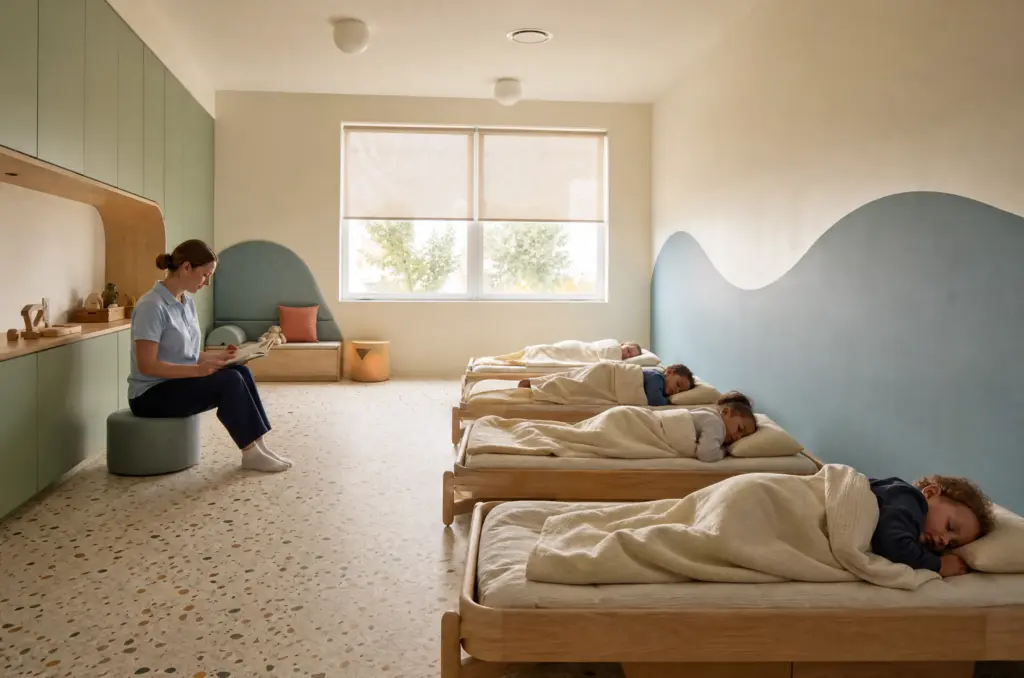
Sleep. Most children in this band still need a substantial midday nap, and the transition from two naps to one usually happens somewhere inside it. Ask how a program handles a child whose rhythm differs from the group, and what happens on the days a child does not sleep.
Food. Toddler appetite is famously erratic, and a week of eating almost nothing followed by a week of eating everything is normal. Ask whether food is used as reward or leverage, because it should not be. Ask whether children serve themselves where possible, since that is both practical-life work and a way of keeping eating self-directed.
Toilet learning. Ask when they start, how they decide a child is ready, and what happens with accidents. Readiness is physiological and individual, and any program working to a calendar rather than to the child is going to create a battle nobody needs. A calm answer here tells you a great deal about the program overall.
When should you start looking?
Early, for the same structural reasons that make every part of the local market tight. Toddler spaces typically open only when a specific child moves up an age band, which happens on that child’s schedule rather than on any predictable cycle.
If your child is approaching eighteen months and you do not yet have care arranged, join lists now. We cover how local lists actually work, including priority rules and the June to September movement window, in our guide to child care waitlists in Squamish. If your child is younger, our guide to infant care in Squamish covers the band below this one.
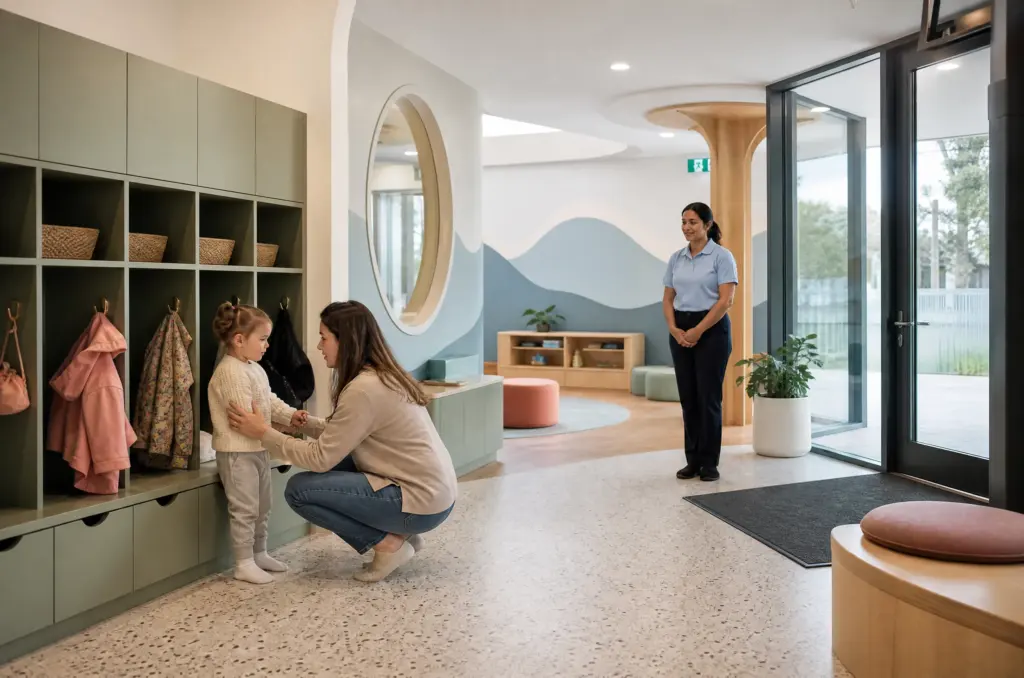
When you do get a visit, our guide to what to look for on a child care tour covers what to watch beyond the tour script, and our guide to starting child care covers the settling-in period that follows.
What questions get real answers?
Ask these on any visit, and listen for specificity rather than reassurance.
How many children are in this room and how many educators, at the busiest point of the day. How long has the educator in this room been here. What happens when two toddlers want the same thing. Walk me through what happens when a child has a meltdown. What can a child do here that they could not do at home. How do you decide when a child moves up to the next group, and how is that transition handled.
That last one matters more than it sounds. Moving rooms is a genuine loss for a two year old who has just built trust with specific adults, and programs that handle it gradually, with visits and familiar faces, are doing something real.
What this looks like at Kinder Roots
Our JK1 program covers eighteen to thirty months, sitting between our Infant Toddler program and JK2. It is built around exactly what this age needs: an environment where almost everything in reach is allowed, real practical-life work, generous physical movement, and educators whose first job in a difficult moment is to stay calm and stay close. You can see how the age bands connect on our programs page, and how the day is structured on our curriculum page.
Finding good toddler care Squamish families can rely on takes longer than it should, and the eighteen to thirty month band is the one most often squeezed. Start early, ask about the hard moments rather than the schedule, and trust what you see in how adults speak to children who cannot yet speak back properly.
Now enrolling in Squamish
A room built for doing it yourself
Our JK1 program covers 18 to 30 months: an environment where nearly everything in reach is allowed, real practical-life work, room to move, and educators whose first job in a hard moment is to stay calm and stay close.
Join the waitlistRedbridge campus, 1500 Scott Crescent, Squamish. Ages 10 months to 5 years.