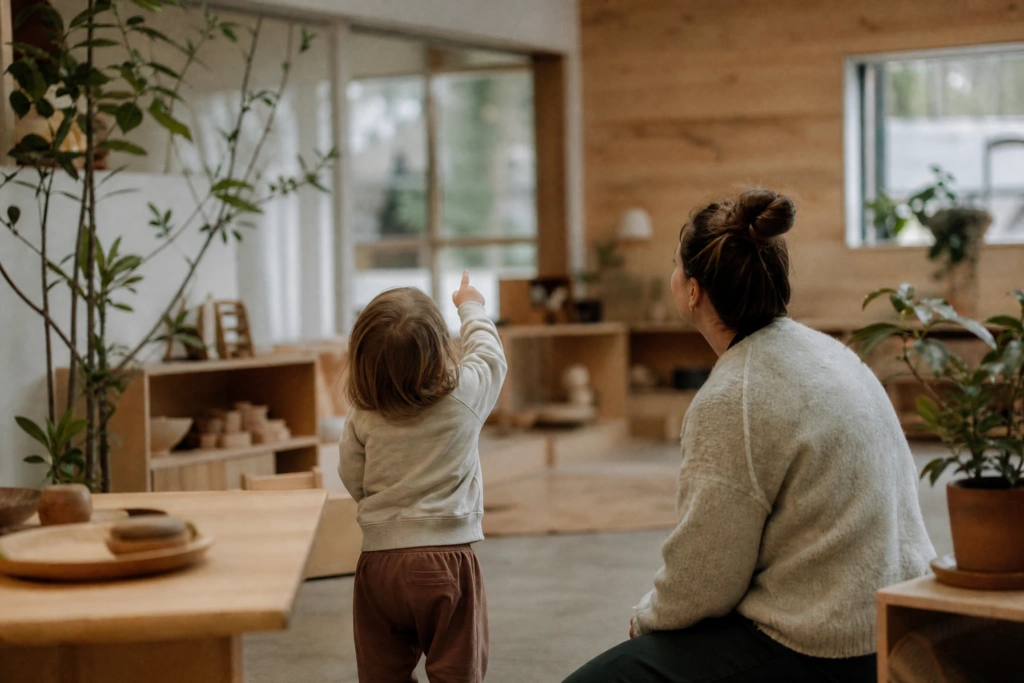
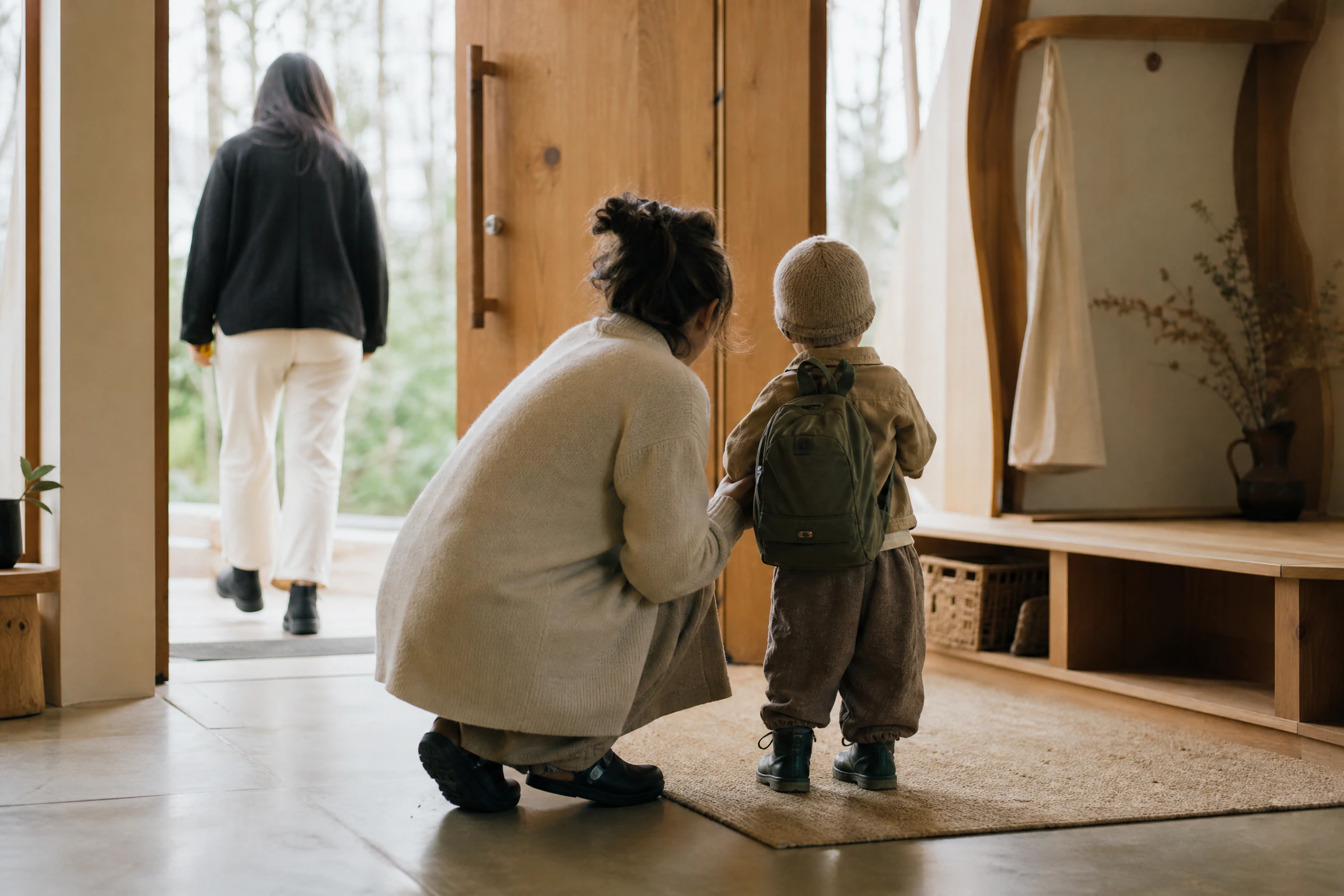



A child who cries at drop-off is the single most common reason parents second-guess a decision they made carefully. It feels like evidence. It is worth knowing early that separation anxiety at drop-off is a developmental milestone rather than a verdict, that it arrives on a fairly predictable schedule, and that the handover itself has more influence on how long it lasts than almost anything else.
Here is what is happening, what helps, and what quietly makes it worse.
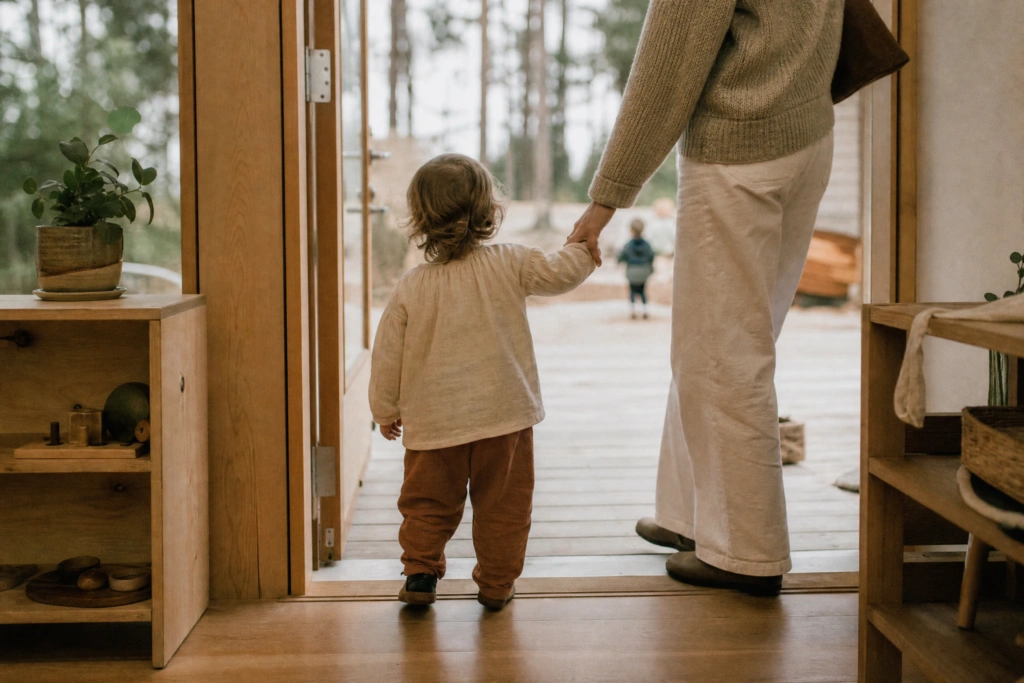
What is separation anxiety at drop-off, and why does it start?
Separation anxiety appears when a child develops object permanence, the understanding that you continue to exist when you are out of sight. Before that, you leaving is simply you ceasing to be. After it, you leaving is you being somewhere else without them, which is a far more interesting problem.
It typically emerges somewhere between eight and ten months, peaks for many children between ten and eighteen months, and then returns in waves. A second round around two is common, and a third around three, often triggered by something unrelated like a new sibling, a move, an illness, or a stretch of poor sleep.
The important reframe: this is a sign of secure attachment, not a sign of distress about the program. A child protests separation from the person they are most attached to. The protest is the attachment working.
How long does it usually last?
Two different timelines matter here, and parents are usually told only about the first.
The first is settling into a new program. Most children move through the hardest part within two to four weeks, with the first week typically the worst and real improvement visible by the end of the second. Our piece on the first few weeks of daycare lays out that arc.
The second is the one nobody mentions: the morning protest can continue long after the child is genuinely settled. A child can cry for ninety seconds at the door and then have an entirely good day, every day, for months. The crying becomes a transition ritual rather than a distress signal. The way to tell the difference is not how the goodbye looks. It is what happens five minutes later.
Ask for that specifically. Ask your child’s educator how long the recovery takes and what your child does afterwards. A child who settles within a few minutes and engages with the room is fine, whatever the doorway looked like.
What actually helps at the door?
The research and the practice agree on a short list, and most of it runs against instinct.
Keep the goodbye short, warm, and the same every time. Predictability is the active ingredient. A consistent sequence, the same words, the same small ritual, the same number of hugs, gives the child a script. A goodbye that varies in length depending on how upset they seem teaches them that being upset extends it.
Tell them you are going, and go. A clear statement, a stated return point they can understand, after lunch, after outside time, and then leave. Children who are told plainly do better than children who are managed around.
Hand over to a person, not to a room. The transfer should be adult to adult, with the educator taking the child, making eye contact, and starting something. A child released into open space has nothing to attach to. A child handed to a familiar adult who has a plan has somewhere to go.
Stay steady. Your child is reading your nervous system, and they are good at it. An adult who is calm and matter-of-fact communicates that this place is safe and this separation is ordinary. An adult who is visibly anguished communicates the opposite, no matter what words they use.
Arrive with time. A rushed drop-off is a harder drop-off. The ten minutes you save by hurrying get spent at the door.

What makes it worse?
These are the common ones, and most of them come from kindness.
Sneaking out. It avoids one bad minute and costs you weeks. A child who discovers that a parent can vanish without warning starts monitoring you instead of engaging with the room, and the vigilance carries into the whole day.
The long goodbye. Coming back for one more hug, lingering in the doorway, returning after you hear crying. Each repetition restarts the separation and teaches that the protest works. The kindest version of this is the brief one.
Negotiating or bargaining. Offering a reward for a calm goodbye frames the separation as something that requires compensation.
Over-explaining. A long reassuring speech signals that there is something here that needs a long reassuring speech. Short and confident lands better.
Watching from the window. Understandable, and it extends the transition for everyone. Call instead. Any good program will tell you honestly how your child is doing, and most will send a photograph.
What should a program be doing on its side?
Drop-off is a service moment, and it is reasonable to expect it handled deliberately.
An educator should be free at the door rather than mid-task across the room. The child should be greeted by name, by an adult who comes to them. There should be a named primary person who knows your child’s particular pattern. There should be something ready to move into, because a transition into activity works and a transition into waiting does not.
At Kinder Roots the handover is one of the Three Steps of Service, Warm Welcome, Mindful Handover, Fond Farewell, and it is treated as part of the curriculum rather than a logistical problem to clear. The ten-foot rule applies: within ten feet of a family, an educator stops task mode, makes eye contact, and uses the name. A morning that is designed holds a child better than a morning that is merely staffed.
On a tour, watch a real drop-off if you can. It will tell you more than the answers to any question you ask. Our guide to what to look for on a tour covers what else is worth noticing.
When is it worth a closer conversation?
Most separation anxiety resolves on its own. A few patterns justify sitting down with your child’s educators.
Distress that is not improving at all after four to six weeks. A child who does not settle within fifteen or twenty minutes on most days. Distress that has appeared suddenly in a child who was previously fine, which usually points to something specific and findable. Anxiety that has spread into sleep, eating, or separations at home. Or a child who has gone quiet and withdrawn rather than upset, which is easy to miss because it looks like coping.
None of these mean something is wrong. They mean there is information worth gathering, and the people who spend the day with your child are the place to start.
What the goodbye is actually teaching
A separation handled well is not a bad moment to be minimized. It is one of the first times a child experiences something hard, is held steady through it, and discovers that it ends and that the person comes back. Done consistently, that is how a child learns the world is reliable. The crying at the door is not the failure of the morning. It is the beginning of the lesson, and the calm you bring to it is the part that teaches.
Now enrolling in Squamish
A handover designed rather than improvised
The Three Steps of Service, Warm Welcome, Mindful Handover, Fond Farewell, are part of our curriculum rather than our logistics. Every child has a named primary educator who knows their particular pattern at the door.
Join the waitlistRedbridge campus, 1500 Scott Crescent, Squamish. Ages 10 months to 5 years.
Reviewed by the Kinder Roots Education Team