


The preschool Squamish years, between three and five, are the ones parents most often misunderstand, usually because school is now visible on the horizon and the question quietly shifts from “is my child happy” to “is my child ready.” It is a reasonable worry and it points at the wrong things.
What actually predicts how a child manages the transition to kindergarten has very little to do with letter recognition and a great deal to do with whether they can manage a frustration, ask for help, sustain attention on something difficult, and recover when a plan falls apart. This guide covers what the three to five years are genuinely for, what to look for in a Squamish program, and what school readiness actually means.
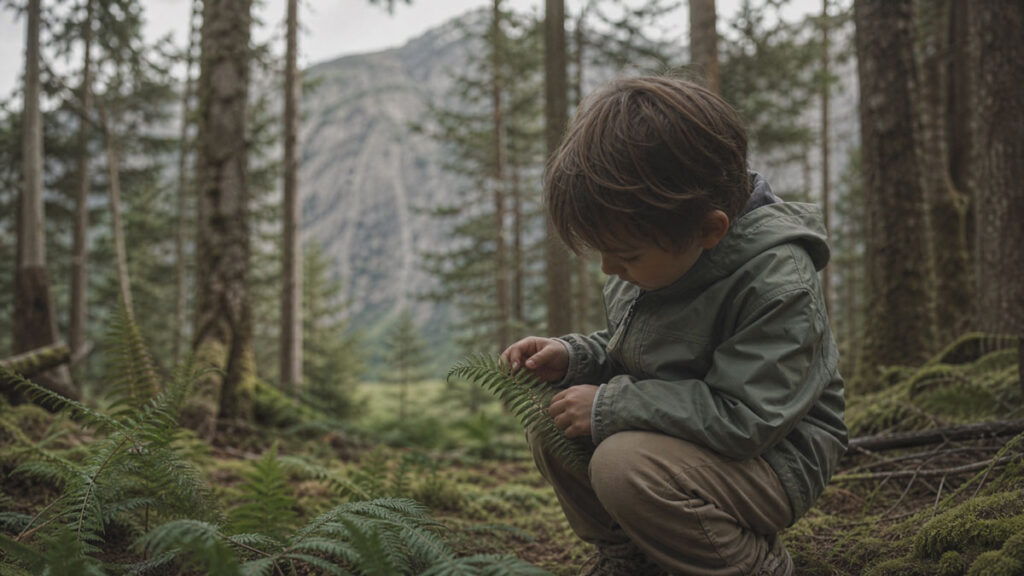
What changes between three and five?
A great deal, and quickly. This is the period in which a child moves from parallel play into genuine collaboration, from managing feelings with adult help into the early stages of managing them alone, and from short bursts of attention into sustained work that can span days.
Three particular shifts are worth understanding, because they shape what a good program does with these years.
Social reasoning arrives. A three year old plays alongside other children. A five year old negotiates roles, resolves disputes, forms and repairs friendships, and understands that other people hold different views. This does not develop automatically. It develops through hundreds of small negotiations with peers, supported by adults who step in enough to keep things safe and rarely enough that the child does the actual work.
Every time an adult resolves a dispute a child could have resolved, the child loses one repetition of something they need thousands of.
Sustained attention becomes possible. A four year old can hold a project across several days if the environment lets them. This is why long uninterrupted blocks matter more than a full timetable. A day chopped into twenty-minute segments teaches children to work in twenty-minute segments, which is precisely the opposite of the capacity you want them to build.
Self-regulation becomes the central work. Not compliance, which is different. Regulation is the ability to notice a rising feeling and do something with it other than be overwhelmed. It is the strongest single predictor of how a child manages the first year of school, and it is built through practice with a calm adult nearby, not through being told to calm down.
What does school readiness actually mean?
Kindergarten teachers, when asked what they wish arriving children could do, consistently name the same things, and they are rarely academic.
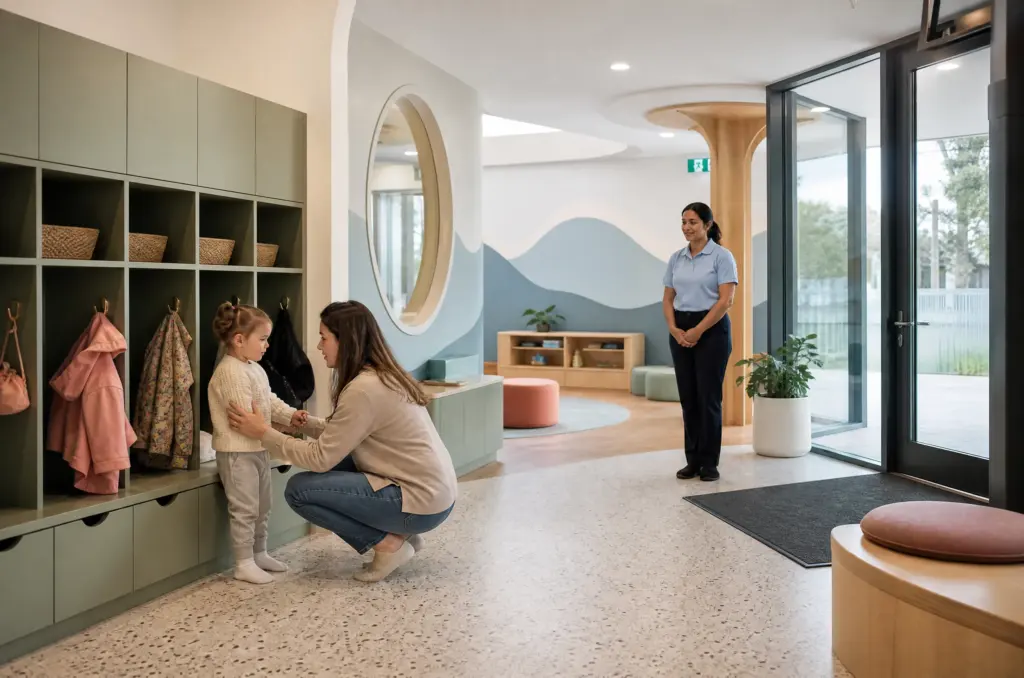
Can the child separate from a parent and settle within a reasonable time. Can they follow a two-step instruction. Can they ask an adult for help using words. Can they manage a coat, a lunch, and a bathroom trip largely alone. Can they take turns and wait, imperfectly but genuinely. Can they cope with not getting what they want without the day ending. Can they sustain attention on something an adult chose, for a while, even when it is not their first preference.
Letters and numbers appear far down that list, and there is a reason. A child with those capacities picks up academics quickly. A child without them struggles regardless of how many letters they arrived knowing.
This matters for choosing a program, because a program that spends these years on worksheets is optimising for the visible thing at the cost of the thing that actually carries. If a program shows you a lot of completed identical craft outputs, ask what happened in the making of them. Our guide to Montessori, Reggio and the Kinder Curriculum unpacks the language programs use to describe this. Twenty identical results usually means twenty children following adult instructions, which is not the same as twenty children thinking.
What should a good preschool Squamish program look like?
A few concrete things to watch for on a visit.
Long blocks of uninterrupted time. Look at the daily rhythm. Are there substantial stretches where children choose and sustain their own work, or is the day a sequence of short adult-led segments?
Children’s actual work on the walls. Not commercial decoration, and not twenty identical crafts. Real, varied, imperfect work displayed at child height, ideally with some record of what the child said about it.
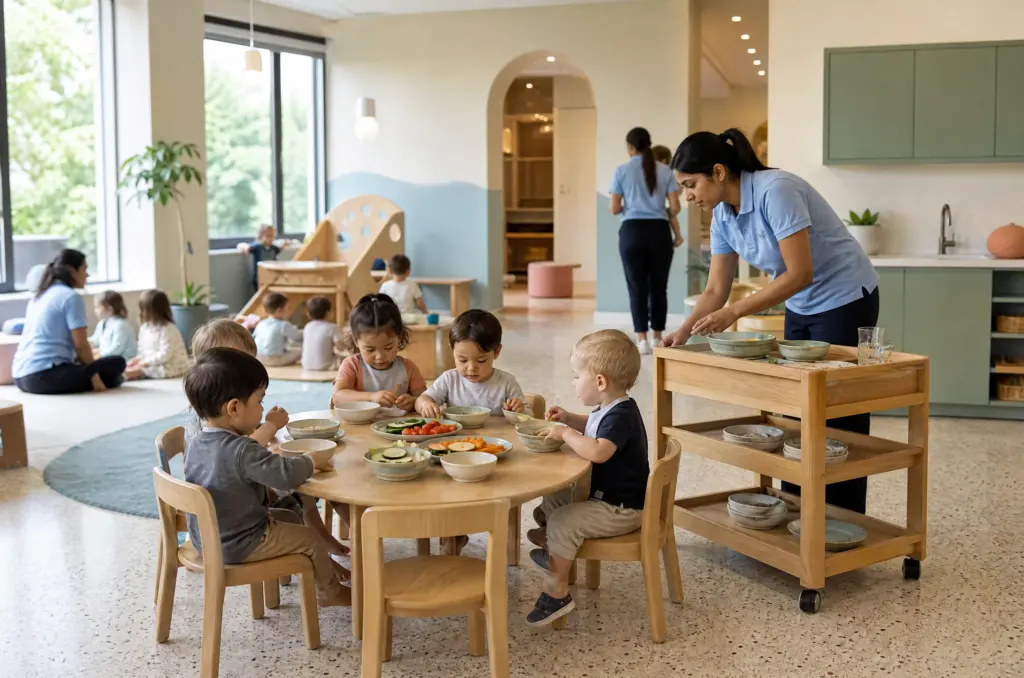
Real tools and real responsibility. Children of this age can use actual scissors, pour their own water, prepare parts of their own snack, and take responsibility for tidying. Programs that do these things build capability. Programs that do everything for children build dependence and then wonder why the children seem young.
Outdoor time in all weather, which our guide to outdoor play in early childhood covers in full. In Squamish this is both easy and essential. Physical literacy, risk assessment, and simple regulation all improve outdoors, and children who spend real time in weather become children who are not defeated by it.
Adults who narrate rather than direct. Listen to how educators speak. “You are working hard on that” teaches something different from “good job.” The first describes what the child did and hands them the assessment. The second hands the assessment to the adult.
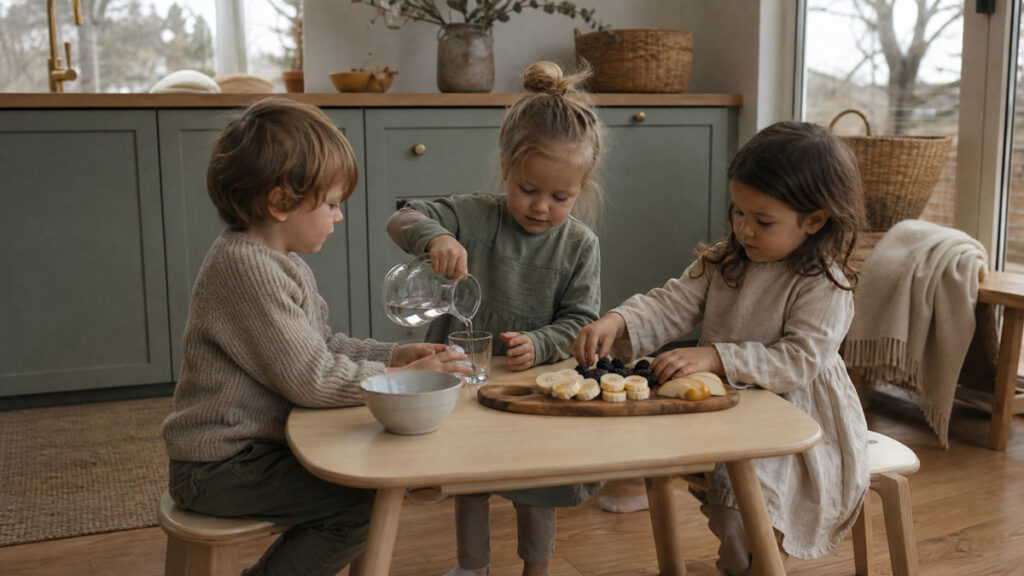
What about the transition to kindergarten?
The move to school is a genuine transition, and it is easier when the years before it have not been spent rehearsing school.
What helps most is a child who has practised being a person in a group: managing their own belongings, tolerating the pace of others, recovering from disappointment, and asking for help. Those are portable. A child who has them will handle a new building, a new adult, and a bigger group.
Practically, in the final year, look for a program that is honest with you about where your child sits, that talks with you about the transition before the summer rather than during it, and that supports the specific things your child finds hard rather than running a generic readiness programme at everyone.
It also helps to say the obvious thing out loud: children develop at genuinely different rates, and a child who is not yet doing something at four is usually a child who will do it at five. Anxiety about pace transmits, and a relaxed adult is one of the more useful things a nearly-five year old can have nearby.
When should something be looked at more closely?
Most variation in these years is normal. Some of it benefits from a closer look, and the window in which early support makes the biggest difference is not long.
Things worth mentioning to your program or your care provider include speech that unfamiliar adults struggle to understand by around four, persistent difficulty joining other children after a settled period, unusually intense reactions to ordinary sensory experience, or a child losing a skill they previously had.
None of these means something is wrong. All of them are worth a conversation. A program that observes carefully and raises things early is doing something valuable, and one that avoids the conversation to keep things comfortable is not. Ask any program you are considering what structured developmental observation they use, how often, and what happens with what they notice.
What this looks like at Kinder Roots
Our JK2 preschool Squamish program is for children three to five years old, and it is built around exactly this: long stretches of self-directed work, real tools, substantial outdoor time in the landscape around Squamish, and educators whose main job is to observe closely and intervene rarely. You can see how it sits alongside our younger programs on our programs page, and how the daily rhythm works on our curriculum page.
The three to five years are not a waiting room before school. They are the years in which a child assembles the capacities that school will draw on, and they deserve to be spent on the things that actually carry. Choose the program that takes that seriously, and let your child be the age they are.
Now enrolling in Squamish
Let your child be the age they are
Our JK2 program for three to five year olds is built around long stretches of self-directed work, real tools, and substantial time outdoors. The capacities school draws on are built here, not rehearsed here.
Join the waitlistRedbridge campus, 1500 Scott Crescent, Squamish. Ages 10 months to 5 years.