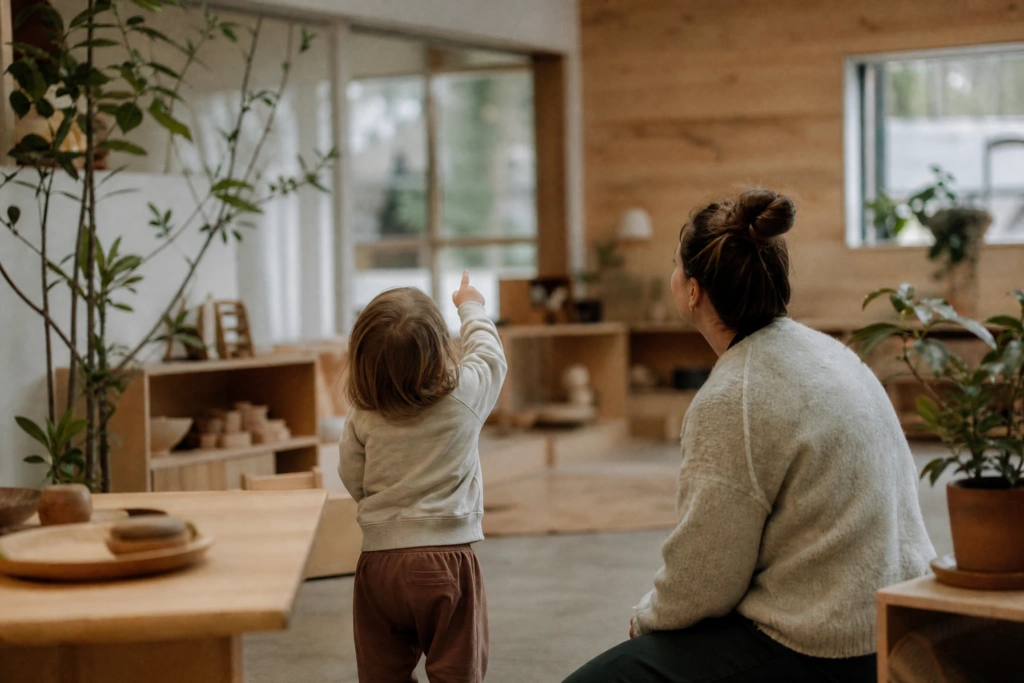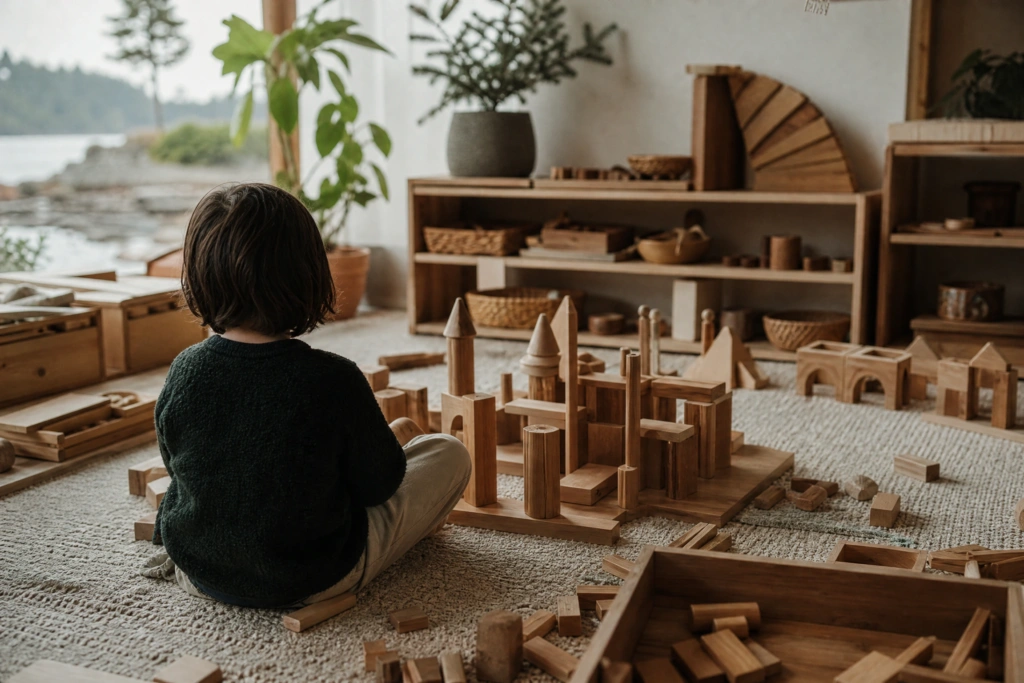



Parents of four year olds in Squamish start asking about kindergarten readiness around this time of year, usually after someone mentions that a neighbour’s child is already reading. The honest answer is that reading is not what kindergarten is waiting for. School District 48 teachers receiving a new class in September are looking at a much shorter and more practical list, and almost none of it is academic.
Here is what readiness actually means, what the year before school is for, and what to leave alone.
What does kindergarten readiness actually mean?
Ask a kindergarten teacher what they want from an incoming class and the list is consistent, short, and almost entirely about function rather than knowledge.
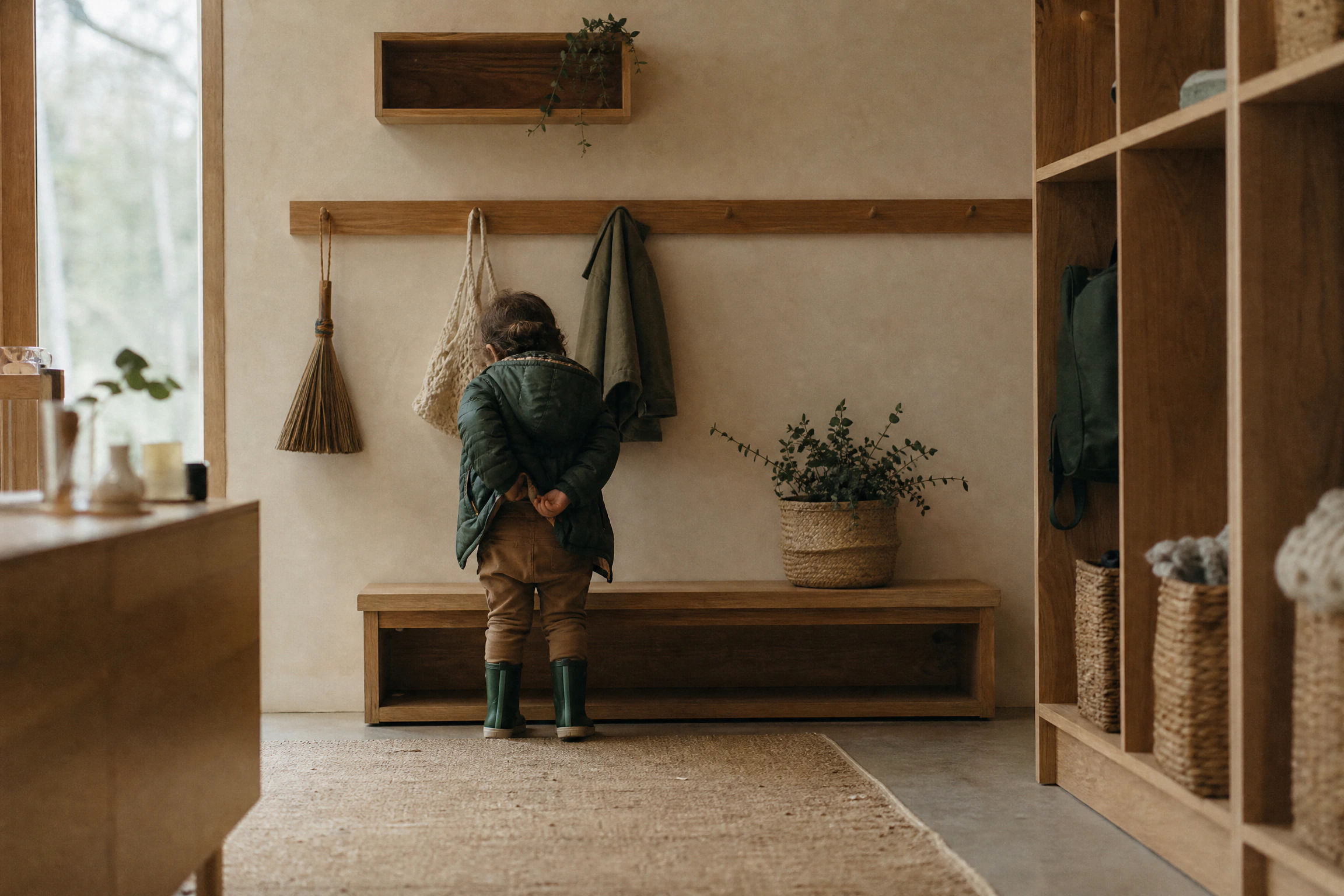
They want a child who can separate from a parent and recover within a few minutes. A child who can manage a coat, a zipper, a lunch container, and the bathroom without an adult doing it for them. A child who can hear an instruction given to a group and understand that it applies to them. A child who can wait, take a turn, and tolerate not going first. A child who can ask for help in words. A child who can sit with a task for ten or fifteen minutes without needing it to be entertaining. A child who can handle being told no.
That is most of it. Notice what is absent: letter recognition, counting past ten, writing a name, reading anything. Those are taught in kindergarten, which is the point of kindergarten. What cannot be taught efficiently to twenty-two children at once is the regulation and independence that make teaching possible at all.
When does a child start kindergarten in British Columbia?
The rule comes from the BC School Act and it is a calendar rule rather than a judgement call. A child enters kindergarten in the September of the school year in which they turn five by December 31. That means a child born in January and a child born in December start together, with almost a full year of development between them.
School District 48 Sea to Sky accepts kindergarten registration for the coming year well in advance, and registration asks for a birth certificate, proof of BC residency, a BC Services Card or Care Card, and immunization records where available. Early French Immersion is offered locally at Squamish Elementary and Garibaldi Highlands Elementary, with kindergarten as one of the two entry points.
Deferral is permitted. A family may hold a child back a year, and the district will tell you the process. It is worth knowing the option exists, and worth knowing that it is rarely the thing that makes the difference. Confirm current dates and requirements with SD48 directly, since registration windows shift year to year.
Why is self-regulation the real predictor?
This is the part that gets the least attention and does the most work.
A child who can regulate, meaning one who can notice they are frustrated and recover without coming apart, is a child who is available to learn. A child who is dysregulated is not being difficult. They are spending everything they have on managing their own internal state, and there is nothing left over for phonics.
Regulation is not a trait a child either has or lacks. It is built, slowly, through hundreds of experiences of being upset in the company of a calm adult who stays steady and helps them back. That process has a name, co-regulation, and it is how the capacity to self-regulate eventually gets installed. Our piece on how co-regulation works sets out the mechanism.
The environments a child spends their days in are inputs to this. A room that is calm, predictable, and designed with some restraint supports regulation. A room that is loud, cluttered, and visually relentless undermines it. Before letters, before numbers, before any measurable academic skill, what a four year old is building is the internal foundation that the rest will stand on.
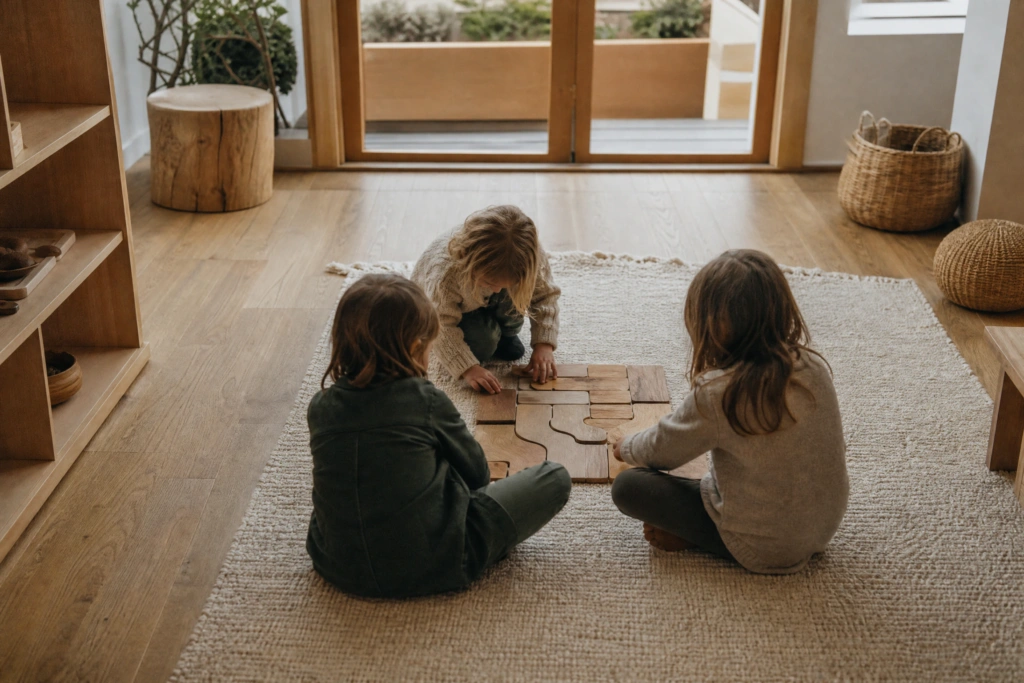
What is the year before kindergarten actually for?
Ages three to five are not a waiting room. They are the stretch where a child moves from parallel play into genuine collaboration, from naming feelings into managing them, from needing help into preferring to do it themselves.
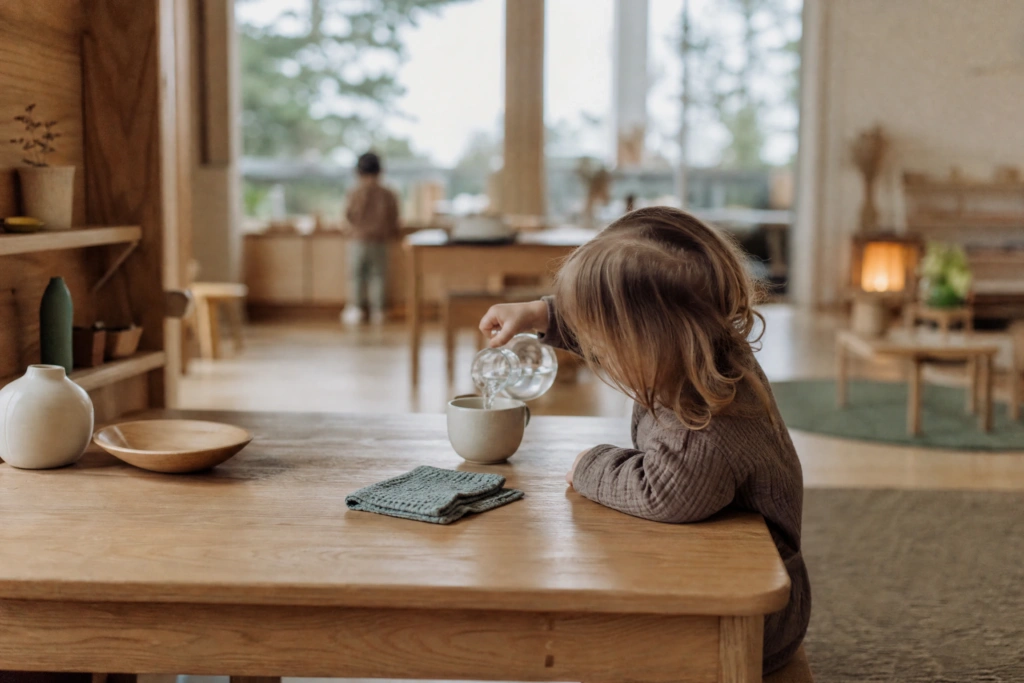
In practical terms, the year before school is where a child gets substantial practice at the things kindergarten will assume: being part of a group of peers for a full day, following a rhythm that is not set by their own preferences, resolving a dispute over a shared object, and sustaining attention on work they chose. A program that offers real independence in practical tasks, pouring, serving, dressing, tidying, is building the exact competence a September classroom will draw on.
Our guide to what ages three to five are actually for covers the developmental territory in detail.
What should you do at home, and what should you leave alone?
The useful list is short and unglamorous.
Read together daily, and talk about what you read rather than testing comprehension. Narrate the world in full sentences, because vocabulary at five is one of the better predictors of later reading and it comes almost entirely from conversation. Give your child jobs they are genuinely responsible for. Let them finish things, including things they are doing slowly and badly. Let them be bored, since boredom is where self-directed play starts. Keep a predictable routine, especially around sleep, because a tired five year old looks exactly like an unready five year old.
What to leave alone: worksheets, flashcards, letter drills, reading apps, and any program promising an academic head start. Children who are pushed into formal academics early show no durable advantage by the middle primary years, and some arrive at school having already learned that this kind of work is unpleasant. That is a real cost for no gain.
Also leave alone the comparison. The child in the group who is reading at four is usually a child who happened to be ready to read at four. It is a variation in timing, not a ranking, and by grade two it is invisible.
What if you are genuinely worried?
Readiness concerns that persist are worth taking seriously, and the thing to do is ask rather than wait.
Speak to your child’s educators first, since they see your child in a group of peers all day and have a reference range you do not. Ask what they observe about language, attention, play with others, and independence. If something warrants a closer look, BC has public pathways for it, and our piece on developmental screening in early childhood explains how they work and what the process involves.
Early is better than late for anything that turns out to need support, and most of what parents worry about turns out to be ordinary variation.
What readiness really looks like
The child who walks into kindergarten well prepared is not the one who arrives knowing the most. It is the one who arrives settled: able to leave a parent at the door, ask for what they need, wait their turn, stay with something hard for a while, and come back from being upset. Those capacities are built in the years before school, in ordinary days, with adults who stay calm. Get that right and the letters take care of themselves.
Now enrolling in Squamish
The years before school, used well
Our JK2 program for ages three to five is built around real independence, long uninterrupted work, and the regulation that kindergarten will draw on. Opening at Redbridge in Squamish for Fall 2026.
Join the waitlistRedbridge campus, 1500 Scott Crescent, Squamish. Ages 10 months to 5 years.
Reviewed by the Kinder Roots Education Team